Messenger enables teams to coordinate faster, streamline customer conversations, and reduce operational friction. This guide explains what “Messenger” typically covers in business contexts and how organizations evaluate platforms for reliability, governance, and user experience. It then outlines practical comparison conditions, selection steps, and operational requirements based on expert industry perspectives and common compliance considerations.
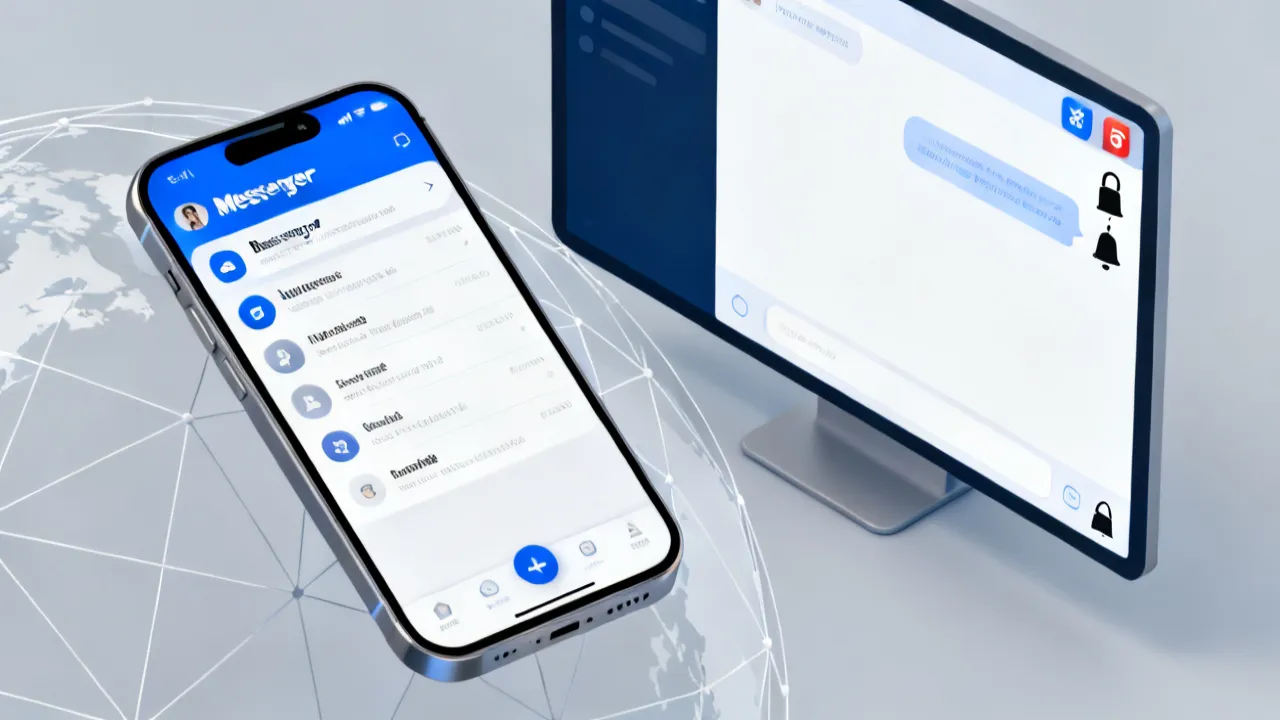
Messenger-based communication can strengthen customer support, internal coordination, and partner workflows—but only when the organization evaluates reliability, governance, and security requirements up front. This expert guide reviews how “Messenger” solutions are commonly used in professional settings, what decision criteria teams should apply, and how to implement a messaging approach that is auditable, scalable, and user-friendly.
In very modern organizations, “Messenger” is not just a chat screen. It becomes a communication layer that may integrate with contact management, customer relationship systems, help-desk tooling, identity controls, and—depending on the provider—messaging compliance and retention policies. The strongest outcomes come from aligning the tool with measurable service goals and operational constraints (such as role-based access, escalation routing, and data handling practices).
Because messaging platforms can impact customer data and internal information flow, selection should prioritize practical controls: consistent message delivery, controlled access, logging where required, and a clear approach to how conversations are captured, moderated, and managed over time.
From an industry perspective, Messenger programs tend to succeed when three conditions are met: (1) the organization sets clear expectations for response times and ownership, (2) users receive training aligned with real scenarios (sales leads, support tickets, incident communications), and (3) governance is designed early rather than patched later.
Conversely, failures usually stem from mismatched workflows—such as allowing unstructured conversation ownership, lacking escalation rules, or failing to align messaging behavior with policies for privacy and recordkeeping.
An expert lens also considers operational friction. If the platform doesn’t fit your existing processes (for example, how staff triage inbound messages, how supervisors review quality, or how handoffs occur), the tool may become a parallel channel that creates inconsistency rather than improvement.
Additionally, messaging initiatives often fail when organizations underestimate behavior change. Moving from email or ticket portals to Messenger affects how staff write (shorter messages, more frequent updates), how customers interpret timelines (instant delivery signals responsiveness), and how supervisors evaluate quality (harder to audit “quick chats” compared to formal tickets). Therefore, the “tool choice” must be matched with a “communications operating model.”
When evaluating “Messenger” as a business communication channel, focus on capabilities that directly affect service quality, accountability, and security posture. Below are the very common criteria used by procurement, IT governance, and customer experience teams.
Professional messaging must behave predictably under real-world conditions. Look for dependable delivery behavior, clear status indicators (where available), and predictable handling of attachments or media. Reliability is not only about “messages arriving,” but also about how the system handles intermittent networks, device switching, background syncing, and large payloads (documents, images, voice notes, or screenshots).
For operational resilience, teams also assess how the service behaves during outages, including whether there are documented incident processes and service-level commitments. Important reliability factors to probe include message ordering (do replies appear in the correct chronological sequence?), delivery receipts (can staff confirm whether a customer has received an attachment?), and graceful degradation (if a workflow integration fails, does the conversation continue without breaking audit trails and routing?).
Another reliability area is “functional consistency” across user types. For example, administrators, supervisors, and frontline agents should see the same conversation timeline. If supervisor dashboards show different states than agent screens, it creates operational confusion and weakens governance.
Messenger adoption inside organizations should include role-based access and clear user management. Consider how the platform handles onboarding/offboarding, whether permissions can be granular (e.g., support agent vs. supervisor), and how access is audited.
In real deployments, user lifecycle management becomes critical. Employees change roles, leave the company, and get reassigned to new regions or business lines. You need confidence that access is removed promptly and that stale accounts cannot continue reading, moderating, or exporting conversation data.
Evaluate whether the platform supports integrations with your identity provider (such as SSO using standard protocols). If it does not, administration overhead rises and the risk of human error increases. Ask how the platform handles password reset flows, session timeouts, and risk-based logins. For organizations that follow strict security standards, you may also request support for multi-factor authentication and adaptive access policies.
Also consider “privileged actions.” For example, ability to delete content, export logs, create or remove retention rules, change routing policies, or view archived conversations should be restricted and audited. If the platform provides powerful administrative functions without robust guardrails, it may be unsuitable for customer-facing or regulated environments.
In regulated or risk-sensitive environments, message retention and audit logs matter. Governance requirements typically include: retention rules, the ability to suspend or restrict accounts, and administrative visibility into how messaging is used.
Governance isn’t only a back-office function. It affects day-to-day operations. For example, if retention policies purge certain content too quickly, teams may lose context for escalations, disputes, or compliance reviews. Conversely, retaining too much information for too long may violate privacy constraints and increase the burden of data handling.
When evaluating governance capabilities, teams should verify whether the platform supports:
Moderation itself is governance-adjacent. Tools that can detect spam, block suspicious links, quarantine harmful content, or enforce verified user status can reduce risk. But governance must also include operational policies: who reviews flagged content, how quickly, and how escalation is documented.
Many teams want Messenger to feed structured workflows. Integration might include help-desk assignment, routing rules, CRM notes, or ticket creation. The benefit is reduced context switching and better continuity when customers re-contact support.
Integration is often where cost overruns occur, so it should be evaluated early. It’s not enough that a platform has “an integration” in marketing materials. You should assess whether integration flows are bi-directional and how they handle edge cases.
For example:
Also evaluate integration with knowledge bases, ticket templates, and internal playbooks. In mature organizations, Messenger often becomes the “front door” to the support workflow. The messaging layer should not become a separate system of record; rather, it should link to the system of record or a structured record store.
Security evaluation should be grounded in documented practices. Teams typically review encryption in transit, authentication standards, data handling descriptions, and the provider’s approach to incident response. Where possible, request formal documentation and security materials (e.g., compliance reports) during vendor due diligence.
When assessing security for messaging, ask specific questions that go beyond generic assurances. You want to understand:
Privacy considerations also include how the platform handles personally identifiable information (PII), user-generated content, and retention exceptions. If your customers include minors, or if you operate under strict consent rules, you need to validate how the system supports consent-aware communications and deletion requests (where applicable).
If your Messenger channel involves customers, you should define how to handle spam, harmful content, impersonation, and account misuse. Look for moderation tooling and operational policies. Even when technical features exist, success depends on staff processes for escalation and resolution.
Moderation should cover both automated and human processes. Automated checks may include content scanning, link reputation services, or detection of suspicious patterns. Human review should be guided by decision rules: what qualifies as a violation, what actions are permitted (warn, block, quarantine, suspend), and how decisions are documented for audit purposes.
Consider also identity verification and anti-impersonation. In some customer support contexts, you may need to ensure the person contacting you is actually associated with an account. Solutions may include verification prompts, identity confirmation steps, or restricted sharing of sensitive information until verification is complete.
Another practical abuse prevention area is “data leakage through messaging.” Agents might accidentally share internal information, private customer data, or confidential documents. Your moderation and governance plan should include staff guidance, automated warnings for sensitive keywords (if supported), and training to help staff follow proper disclosure rules.
From an implementation standpoint, an effective Messenger rollout is staged: discovery, pilot, training, and governance hardening. Organizations that skip discovery often discover late that message ownership, categorization, or escalation rules weren’t defined.
A strong approach starts with mapping your communication scenarios. Examples include: inbound customer questions, order updates, onboarding assistance for new partners, and internal incident alerts. Each scenario should have an assigned owner group, a defined response SLA (service level objective), and a message-handling policy.
Once scenarios are documented, configure workflows accordingly. If your Messenger environment supports roles or routing, ensure the right staff see the right conversations. If it includes logging, define who reviews logs and how often. If it includes retention controls, align retention windows to internal records practices.
It also helps to establish a “message classification model.” In many organizations, the biggest improvement in messaging maturity comes not from adding features but from classifying conversations consistently. Classification might include categories like Billing, Technical Support, Account Changes, Sales Inquiry, Partner Onboarding, or Compliance Request. Each category can map to routing rules, required templates, and escalation thresholds.
Furthermore, you should decide early whether Messenger is:
Many successful programs are triage-first, resolution-second: triage in Messenger for speed, resolution through ticketing for structure and compliance. But the organization’s chosen approach must be explicit, because it drives governance and integration requirements.
Pricing for Messenger-type business platforms varies widely based on factors such as user count, feature tiers, administrative tooling, and integration requirements. However, it’s usually unwise to anchor decisions solely on headline cost, because hidden costs often appear in integration work, training, and ongoing governance.
As an expert planning practice, teams model total cost of ownership (TCO) across:
Where vendors publish official pricing, teams should still validate whether the selected tier includes the governance and integration features required. For example, some tiers may provide message storage but not export tooling; others might provide retention controls but not legal hold capabilities. If your requirements include audits, retention exceptions, or supervisor tooling, verify whether those are included and not subject to additional licensing.
A mature procurement method also models “cost of non-performance.” If your response time targets are not met, how will the business compensate? Will customers churn, or will staff workload shift into overtime? If you treat Messenger as a customer experience improvement initiative, you should measure expected impact and compare it to TCO.
Finally, avoid overpromising by being explicit in the scope statement. If Messenger is intended to handle only triage at first, don’t sign up for an implementation plan that assumes end-to-end resolution by chat from day one. That misalignment is a common cause of budget creep and user dissatisfaction.
Supplier selection is not just a commercial step—it’s a risk management decision. For Messenger platforms, evaluate suppliers on competence in security posture, operational reliability, and documented governance.
Practical due diligence often includes:
It’s also beneficial to assess the supplier’s track record with enterprise customers. When possible, rely on publicly available trust documentation and established third-party assessments. Use internal governance procedures to ensure the selection is documented and repeatable.
Beyond checklists, expert procurement treats due diligence as a conversation. The goal is to confirm understanding and practical readiness. A vendor who can clearly explain how retention works, what happens during outages, and how audit exports are handled is usually more mature than one who provides vague assurances.
When reviewing contracts, pay attention to clauses that affect operational risk:
These contractual details influence real outcomes during transitions, disputes, and future migrations. A messaging initiative that seems stable today can become costly if data portability is limited later.
Messaging adoption is strongly shaped by local communication norms. Even within the same company, users may have different preferences for how fast to respond, how to format messages, and what constitutes a “complete” handoff. In many workplaces, team members expect concise updates and clear next steps; they may also use culturally familiar phrasing for politeness and tone.
In regions where business communication places emphasis on courteous wording and clarity, it helps to provide lightweight templates for common scenarios (order status, appointment coordination, issue escalation). Templates should be adjustable by role—support agents may need more structured language, while leadership may use a more succinct format for escalations.
Additionally, ensure customer-facing instructions are consistent across channels. If customers contact you through Messenger, they should receive consistent acknowledgements, timelines, and escalation pathways. Inconsistency is one of the fastest ways to erode trust. If a customer sees different commitments depending on the channel (email says “within 24 hours” but Messenger says “instant”), customers may lose confidence or feel mishandled.
Localization also affects moderation and compliance. If you operate internationally, you need policies and tooling that address language differences in spam detection, harmful content detection, and escalation classification. A message scanning solution that works for one language may require tuning or additional rules for another.
Operational culture matters even in internal chat. If internal teams treat “Messenger” as informal, some employees may use it for topics that should remain in formal channels (like payroll changes, legal notices, or security incidents). A mature Messenger program defines boundaries clearly, trains staff, and enforces policies consistently.
The table below reframes additional decision guidance as conditions/requirements and trade-offs you can use in vendor evaluation. It is intentionally structured as a comparison tool, not a marketing comparison.
| Evaluation Focus | What to Require | Why It Matters | Common Pitfalls |
|---|---|---|---|
| Governance | Defined retention approach, admin controls, and auditability suitable for your risk profile | Supports compliance, investigations, and operational accountability | Choosing based only on chat convenience, then lacking recordkeeping or access governance |
| Security Controls | Documented security practices (e.g., encryption, authentication, incident handling) | Protects customer and internal data | Assuming security without reviewing formal documentation |
| Integration Fit | Clear integration paths for CRM/help-desk and workflow routing | Reduces rework and improves continuity | Building parallel processes that don’t update tickets or customer records |
| Operational Reliability | Service reliability expectations and documented support processes | Prevents degraded customer experience during issues | Underestimating outage handling and escalation processes |
| User Management | Role-based permissions and lifecycle controls (onboarding/offboarding) | Limits exposure and ensures correct ownership | Granting broad access “for simplicity,” then struggling to contain risk later |
| Moderation Capability | Tools and policies for spam/abuse handling | Protects users and brand integrity | Relying solely on manual review without defined escalation rules |
For objective background on messaging security and governance principles, organizations commonly reference established security and privacy frameworks. For example, the NIST Cybersecurity Framework (CSF) supports structured thinking around governance, risk management, and operational resilience. Similarly, recognized guidance from standards bodies and privacy regulations informs how organizations handle personal data and access controls. When vendors are evaluated, teams should align requirements to such frameworks and confirm whether the supplier’s controls map to your internal risk management approach.
Practical note: Specific claims about a given supplier’s technical controls should be verified with vendor documentation, contractual terms, and—when relevant—independent reports.
Below is a practical, step-by-step guide that teams can adapt. It focuses on conditions/requirements and operational steps rather than vendor-specific promises.
One of the most overlooked aspects of Messenger deployment is that the “conversation” becomes a process. Without explicit rules, messaging turns into a free-form medium that is difficult to measure, audit, and scale. Defining operational conversation rules creates consistency and reduces risk.
Examples of conversation rules include:
When these rules are defined, the platform’s governance becomes easier to apply because conversations can be classified and routed predictably.
Messenger is often used to resolve inquiries quickly—order status, account questions, and troubleshooting guidance. The key is creating a workflow that ensures unresolved issues become trackable tickets with clear ownership.
To implement support effectively, teams should design a triage path:
In practice, the integration must ensure that the customer does not receive conflicting messages. If a ticket system sends an update but the Messenger thread does not reflect the same status, the customer may interpret it as negligence. Therefore, integration design should include synchronization of statuses and consistent “next step” messaging.
Another support success factor is continuity across time. Many customers message after business hours. Your plan should include after-hours routing (e.g., “we’ll respond within X hours”), escalation for emergencies, and a clear approach for weekends or holidays.
When used for lead follow-up, Messenger should include consent-aware messaging practices and consistent qualification rules. Teams should avoid letting sales conversations become unstructured because it makes reporting and follow-through harder.
Sales-focused Messenger programs need clear policies for:
If the Messenger channel becomes a “shadow CRM,” your reporting will suffer. Therefore, integrations and rules must ensure that sales outcomes update structured records.
Also consider the user experience. Lead nurturing should not feel like a chatbot with generic responses. However, staff need guardrails. If sales agents improvise too much, quality varies by representative. A balanced approach includes approved templates, suggested message structures, and a compliance review for sensitive claims.
Partners often need coordinated handoffs. Messenger can streamline status updates, but only if the organization defines what constitutes a “handoff-ready” message and where the underlying record lives.
Partner communications frequently include timelines, approvals, document exchanges, and operational dependencies. Without structure, partners may interpret unclear updates as delays. Therefore, teams should define standard message patterns for partners:
In some scenarios, partners may need auditability for their internal compliance. Your Messenger program should support stable records—either in-chat exports or links to system-of-record documents.
Internal teams may use Messenger to reduce response time for non-urgent matters. For incidents and urgent communications, organizations often implement additional layers (incident channels, escalation protocols) to ensure messages are actionable and traceable.
When using Messenger internally, you should define boundaries:
Internal Messenger adoption can also create measurement challenges. If leadership wants visibility into work progress, Messenger alone may not provide structured reporting. Therefore, teams often integrate Messenger with project management tools or ticketing systems for work tracking.
Quality assurance is also important internally. Even without customer-facing compliance, you still need to reduce misunderstandings. Define tone guidelines, use templates for approvals/requests, and train staff to avoid ambiguous messages like “Got it” without next steps.
To avoid operational drift, define the following conditions early in your Messenger program:
Operational drift happens when rules are informal or left ambiguous. For example, if agents can decide “case-by-case” whether to create a ticket, you’ll see inconsistent outcomes. Over time, customers will experience different levels of service depending on who responds.
To prevent drift, the program needs a governance cadence. That cadence includes periodic reviews of message categories, quality scoring results, moderation outcomes, and integration performance. Without this, Messenger adoption can degrade into inconsistent behavior and unclear ownership.
Beyond platform security features, a secure Messenger program also requires operational security design. The goal is to reduce risk while maintaining speed.
Key security-by-design practices include:
Security is not a one-time task. Messaging platforms evolve and usage patterns change. Therefore, the organization should plan for periodic security reviews, including audits of admin accounts, verification of retention settings, and assessment of third-party integrations.
Teams typically evaluate Messenger initiatives using process and experience metrics rather than vanity numbers. Good operational metrics include:
To stay objective, measurement designs should be grounded in baseline collection before and after deployment. If you choose to compare performance, document methodology and account for seasonal and staffing changes.
It’s also valuable to measure quality outcomes, not only speed. Examples include:
In mature programs, quality assurance is performed by sampling conversations and scoring them against a rubric. That rubric should reflect both customer experience and policy adherence. For example, a fast response that shares sensitive information incorrectly is unacceptable.
Auditing is where many Messenger programs become robust—or where they become risky. A good audit plan is specific and repeatable.
Organizations often audit:
How often depends on risk. High-risk categories (billing disputes, identity verification, legal/compliance requests) should be reviewed more frequently than low-risk categories (general FAQ).
Audit results should feed back into training and policy updates. If you find recurring issues—like missing identity verification—update templates, adjust routing rules, and retrain staff. Over time, this creates a learning loop that improves both quality and compliance.
Training is not just for how to use the interface. It is for how to behave professionally in a communication medium that feels informal. Messenger can reduce response time but increase the risk of misunderstanding if staff treat it as casual rather than operational.
A strong training program usually includes:
Change management also involves stakeholder alignment. Customer experience teams may want faster responses, while compliance teams may want strict recordkeeping. Operations leaders may need predictable workload distribution. A successful rollout aligns all stakeholders in the operational model.
One useful technique is to pilot with “champions” who represent the diversity of roles. Champions help refine templates, escalation rules, and governance settings. Their early feedback can prevent large-scale confusion when Messenger expands to more teams.
Messenger is often used to resolve inquiries quickly—order status, account questions, and troubleshooting guidance. The key is creating a workflow that ensures unresolved issues become trackable tickets with clear ownership.
In some support organizations, Messenger is used to collect initial troubleshooting data, then route to specialized technical teams. In that model, you must ensure that the data collected is complete and structured enough to be actionable. Otherwise, technicians may need to request additional information, slowing resolution.
When used for lead follow-up, Messenger should include consent-aware messaging practices and consistent qualification rules. Teams should avoid letting sales conversations become unstructured because it makes reporting and follow-through harder.
For example, lead qualification often depends on consistent questions and consistent recording of answers. If agents freehand questions, reporting becomes inaccurate. Standardized question flows and template suggestions can improve both conversion rates and data quality in the CRM.
Partners often need coordinated handoffs. Messenger can streamline status updates, but only if the organization defines what constitutes a “handoff-ready” message and where the underlying record lives.
Some organizations implement partner messaging “checklists.” For instance, a partner may be asked to include a specific reference number, a timeline, and a summary of the current status before the internal team acts. Checklists reduce back-and-forth and improve auditability.
Internal teams may use Messenger to reduce response time for non-urgent matters. For incidents and urgent communications, organizations often implement additional layers (incident channels, escalation protocols) to ensure messages are actionable and traceable.
In internal incident communications, Messenger should not replace formal incident management records. Instead, it should feed into incident channels and ticketing systems so that decisions are preserved and retrospective analysis remains possible.
As Messenger usage grows, scalability becomes more than infrastructure capacity. It becomes process scalability. Your model must handle increased conversation volume without reducing quality or breaching governance.
Consider these advanced capabilities and design patterns:
Automation can improve speed, but it increases the need for governance around what gets automated. For example, if automation suggests refunds or policy exceptions, you must confirm that it can’t bypass required approvals or share restricted information. Automated messaging should be designed within policy constraints and reviewed through guardrails.
Reporting also needs to scale. Teams often start with simple metrics like response time but later require deeper analytics—such as category-level performance, agent performance, backlog trends, and escalation patterns. Therefore, the platform should provide reporting outputs that can be exported or integrated into your analytics systems.
In business contexts, “Messenger” usually refers to a team messaging channel used to communicate with customers or staff. It often includes administrative controls, workflow integration, and governance features depending on the platform.
Security and governance should be prioritized early because messaging systems handle data and create an audit trail of communications. Features matter, but they should be evaluated through the lens of access control, retention, and documented security practices.
Use a requirement-driven evaluation: governance controls, user management, integration capabilities, reliability documentation, and vendor security documentation. Obtain confirmations via formal materials and contractual scope rather than relying on informal assumptions.
Many organizations do integrate messaging into ticketing and customer record systems to reduce context switching. The feasibility depends on the platform’s integration capabilities and the organization’s workflow design.
It’s also important to confirm whether integration supports the full lifecycle of a conversation. For example, not only ticket creation but also ticket status updates, ownership changes, and closure synchronization.
Typically, organizations consider retention rules, role-based access, administrative audit visibility, moderation processes, and documented procedures for escalation and investigations.
Training should cover message tone and clarity, scenario handling (support vs. sales vs. internal requests), privacy boundaries, escalation triggers, and how to confirm resolution or next steps.
Combine platform moderation tools with clear staff policies: spam handling, account verification approaches where needed, escalation procedures for harmful content, and consistent enforcement of communication guidelines.
You should also define how agents respond to suspicious messages. For example, if a user attempts to access accounts, agents should follow verification processes and avoid sharing information until validated.
Timelines vary based on integration scope, governance requirements, and training needs. A staged approach—pilot first, then broader rollout—helps reduce rework and makes time estimates more reliable.
It can be suitable if governance, retention, access controls, and auditing meet regulatory expectations. Organizations should verify supplier capabilities through documentation and align the rollout with internal compliance processes.
Focus on operational and customer experience metrics: response time, triage accuracy, resolution quality indicators, escalation performance, and moderation outcomes—measured using consistent methodology.
Also track “process health” metrics like integration success rates, backlog times in queues, and audit compliance sampling results. If integrations fail silently, you may see customer dissatisfaction even if response time looks good.
A well-designed Messenger strategy is more than faster chatting—it is a controlled communication system that supports accountability, governance, and workflow continuity. When organizations evaluate messenger capabilities with security, integration, and operational requirements in mind, they tend to reduce friction and improve customer experience. By following a staged implementation plan and establishing clear policies, teams can make Messenger a reliable part of day-to-day operations while maintaining professional standards and objective oversight.
To keep Messenger successful over time, the organization should commit to continuous improvement: refine templates, measure quality, audit governance settings, update escalation rules, and retrain staff as workflows evolve. Messenger becomes valuable when it is treated not as an add-on, but as a governed communication channel with measurable performance and clear operational ownership.
A Guide to Cost-Efficient Small Electric Cars for Seniors

Mastering Debt Consolidation: Boost Your Credit Score and Manage Interest Rates

Your Guide to Loans, Credit Checks, and Interest Rates

Affordable Independent Living: Finding the Right Senior Housing

Guide to Senior Living Apartments: Affordable and Comfortable Environments

Leasing a Car: Expert Tips for Your Next Vehicle

Maintaining Oral Health After Tooth Loss with Dental Implants

Maintaining Oral Health with Dental Implants for the Elderly

Jose Raimundo Cardoso: Professional Insight and Context


Understanding 4m Product Sourcing and Supplier Options
This guide explains how 4m buyers evaluate supplier options, pricing factors, and quality controls for consistent procurement outcomes. Objectively, “4m” is often used in sourcing and operations contexts to describe a structured set of variables—commonly manpower, machine, method, and material—though its meaning can vary by industry and region.

How Messenger Shapes Secure Business Communications
This guide explains how Messenger supports everyday business messaging with a focus on reliability, governance, and practical implementation. It provides objective background on messaging platforms—covering message delivery, identity verification, and organizational risk controls—so teams can make informed decisions about how they structure conversations, permissions, retention, and user training.

Strategic Use of Messenger for Modern Businesses
This guide explains how to plan, operate, and measure Messenger-style communications for reliable customer support and sales workflows. It provides objective background on messenger platforms, typical adoption goals, and operational considerations such as governance, security, and response-time discipline. Readers will also find practical conditions and step-by-step setup guidance to improve consistency across teams.

Messenger Top Practices for Reliable Business Chat
Messenger is a practical guide to building dependable, professional business chat. It explains how messaging workflows, governance, and supplier selection influence reliability and customer trust. The article then compares key implementation approaches, outlines requirements and conditions, and provides expert-backed FAQs on security, response quality, and operational readiness.
Messenger Strategy: Expert Guide to Secure Business Messaging
Messenger enables teams to coordinate faster, streamline customer conversations, and reduce operational friction. This guide explains what “Messenger” typically covers in business contexts and how organizations evaluate platforms for reliability, governance, and user experience. It then outlines practical comparison conditions, selection steps, and operational requirements based on expert industry perspectives and common compliance considerations.

How Messenger Shapes Reliable Business Communication
This guide explains how Messenger improves business communication through structured messaging, customer support workflows, and measurable engagement. “Messenger” is a general term for chat-based communication channels used by organizations and individuals. It supports quick replies, conversational context, and integration with customer service processes, helping teams respond consistently while maintaining service quality and transparency.