This guide explains how Messenger supports everyday business messaging with a focus on reliability, governance, and practical implementation. It provides objective background on messaging platforms—covering message delivery, identity verification, and organizational risk controls—so teams can make informed decisions about how they structure conversations, permissions, retention, and user training.

Messenger is very valuable to organizations when it is treated as a structured communication channel—not merely a chat app. For decision-makers, the priority is aligning security, access control, and operational workflow with clear policies for who can message whom, what records are retained, and how accountability is maintained. When implemented with governance in mind, Messenger workflows can streamline support, sales coordination, and internal approvals while reducing the risk of fragmented information.
At the executive level, the goal is to achieve three simultaneous outcomes: (1) speed without chaos, (2) collaboration without uncontrolled data exposure, and (3) traceability without turning every message into a burdensome formality. The highest-performing deployments treat messaging as a “front door” to business processes. They define what belongs in a chat thread, what must be transformed into a ticket or system record, and how the organization can prove what happened if there is a dispute, audit, or incident. Done well, Messenger becomes an operational layer that improves decision latency, reduces rework, and strengthens customer experience.
Just as importantly, executive leadership sets expectations. If leadership treats Messenger as informal by default, teams will use it informally by default—creating gaps in records and accountability. If leadership instead models responsible behavior (e.g., using templates, confirming next steps, and routing final decisions to the system of record), the organization can scale Messenger usage with consistent outcomes.
In everyday business language, Messenger commonly refers to a messaging service that enables real-time or near-real-time conversation across individuals and teams. Unlike email, messaging typically emphasizes speed, back-and-forth clarification, and shorter decision loops. However, in professional environments, speed must be balanced with controls: ensuring messages are attributable to users, that sensitive content is handled appropriately, and that workflows remain auditable when disputes arise.
In many organizations, “Messenger” is also shorthand for a broader set of collaboration patterns: direct messages, group discussions, channels, escalation threads, approvals in dedicated spaces, and sometimes bots or integrations that automate workflows. When companies say they are “using Messenger for business,” they may mean any combination of these. That is why governance should begin with a shared definition of the intended usage patterns: what qualifies as operational messaging, what belongs in approvals, what requires a ticket or record, and what should be kept out of chat entirely.
From an industry perspective, the “top” messenger adoption strategy is rarely about picking a single app and hoping for the top. Instead, it’s about designing an information pathway: how messages are initiated, how they are routed (direct vs. group), how they are escalated, and how they connect to the rest of the business systems—customer support tooling, CRM workflows, HR onboarding, and incident response processes.
For example, consider a simple customer request. In a well-governed system, an agent uses Messenger to confirm identity and gather the minimum details necessary to triage the case. The agent then creates or updates a ticket in the helpdesk system. If the customer’s issue requires an approval (refund, replacement, exception, SLA change), that approval is performed in an approval channel or via an automated workflow, with the final outcome recorded in the ticketing system. Messenger remains the conversation space, while the ticketing system remains the durable record of the decision.
Very organizations don’t fail because the messenger tool can’t technically send messages; they fail when operational expectations are unclear. Consider three common friction points:
When organizations address these issues early—before volume scales—Messenger becomes a reliable component of daily operations.
However, the failure modes rarely remain limited to those three issues. As Messenger grows across an organization, additional problems commonly appear:
The success path is therefore not just about setting policies—it’s about aligning policies with workflow reality. If governance is too heavy, employees will find ways around it. If governance is too light, the organization will eventually inherit a mess of untraceable decisions and uncontrolled data exposure. The practical balance is achieved through role clarity, templates and structured message patterns, and integration into systems of record.
Cybersecurity and compliance teams often view messaging through three lenses: confidentiality, integrity, and availability. Meanwhile, operations leaders care about latency, workflow fit, and user adoption. A robust Messenger strategy aligns all three. Practically, that means:
When messaging is treated as a process, organizations do not evaluate only features like encryption or retention toggles. They evaluate the end-to-end lifecycle of communication:
That process view also clarifies responsibilities. Security teams own controls, but operations teams own workflow fit. Legal/compliance teams own retention and policy obligations. Executives own the acceptance of trade-offs and the measurable outcomes. When those ownership boundaries are fuzzy, messaging programs typically drift into ad hoc usage.
Organizations should not treat messaging as “informal by default.” Even short messages can include account details, customer information, or credentials. A professional implementation typically includes:
For decision-makers, security is not only about preventing data leaks; it is also about preventing the operational consequences of data leaks. A single compromised credential can lead to unauthorized actions, customer data exposure, reputational damage, and incident response costs. Therefore, Messenger governance should include controls that reduce both the probability and the impact of misuse.
Practical security controls to consider (beyond basic authentication and access rules) include:
For reference on general secure communication principles and governance practices, the NIST Cybersecurity Framework provides a widely used structure for managing risks across an organization. (Use internal policies aligned with your applicable regulatory obligations.)
Just as important as technology is behavior. Messaging encourages quick back-and-forth, which can lead to casual sharing. To counter that, organizations typically implement “message hygiene” rules: never share credentials in chat, avoid full personal identifiers when partial identifiers suffice, and validate unusual requests through pre-defined verification steps.
One of the very underappreciated benefits of Messenger is the ability to convert uncertainty into clarity quickly—provided conversations are managed with consistent structure. For example:
When teams treat Messenger as a workflow tool rather than a affordable-form inbox, decision latency drops and accountability improves.
Actionable governance requires more than just good intentions. It requires explicit message patterns and operational “contracts” between teams. For instance, a support workflow might establish:
Similarly, internal approvals often fail when Messenger is used for side conversations without clear authority. A governance model should define who can approve what and how approvals are captured. Consider these operational requirements:
When these requirements are met, Messenger stops being a place where decisions disappear into chat history. It becomes a structured staging area for operational outcomes that are durable and measurable.
Professional messaging depends on the reliability of identity. From an operational standpoint, organizations should ensure that users are correctly mapped to their roles and responsibilities. That means:
Even with technical controls, human verification remains crucial for high-value transactions. Messenger scripts—such as “confirm order details via the standard system”—help reduce errors.
Identity risks in messaging typically include:
Organizations can address these risks through a combination of technical and procedural measures. Technical measures include directory synchronization, single sign-on, and restricting channel creation or membership management. Procedural measures include training, identity verification steps, and escalation playbooks for suspicious activity.
For high-value transactions, consider adopting a “two-step confirmation” approach. For example, if an employee receives a message requesting a change to a payment destination, the employee should verify the request through a separate communication channel (e.g., a system dashboard, ticketing workflow, or verified call-back to a known number). This reduces the effectiveness of chat-based impersonation attacks.
Very businesses eventually need to answer: “Where did we capture that decision?” Messenger can contribute to knowledge retention, but only if retention rules are aligned with company policy. A defensible approach typically includes:
To keep claims objective, organizations should verify retention features with official vendor documentation and align them with internal legal and compliance requirements.
Retention is often misunderstood as “set it and forget it.” In reality, retention should be reviewed periodically because business processes change, regulatory requirements evolve, and operational categories evolve. A mature retention program includes:
Another practical consideration is that retention needs to match the organization’s dispute and audit realities. For customer support, the organization may need to keep enough conversation detail to understand the root cause and resolution steps. For HR matters, retention requirements and access restrictions can be more stringent. For procurement, approvals and commitments may need longer retention for compliance and financial audit trails.
Executives should also be aware that retention decisions affect user experience. If retention rules are too aggressive, employees may lose access to earlier context when troubleshooting. If retention rules are too permissive, the organization may accumulate sensitive data indefinitely, increasing risk and compliance burden. The “right” approach depends on your data classification model and regulatory obligations.
Messenger becomes more effective when it plugs into the broader business stack. Industry top practice is to treat messaging as a front door to structured systems. Examples include:
Even if your organization starts with basic Messenger usage, planning for integration early prevents duplicated work later—such as manually copying information between chat and ticket systems.
Integration should be evaluated on more than technical feasibility. The question is: does integration preserve accountability and data integrity? If a Messenger conversation creates a ticket, the ticket must reliably capture the intent, identifiers, and required fields. Likewise, if a ticket status updates back to Messenger, the update should reflect the source of truth (the ticket system) and not allow chat to become the authoritative decision record.
Operationally, integrations also reduce the friction that causes teams to misuse messaging. When employees can trigger ticket creation quickly from a chat thread, they are less likely to keep the “real work” hidden in chat. When customers receive consistent updates driven by the system of record, messaging becomes a communication layer rather than a record repository.
Common integration patterns include:
Integration governance should define ownership of templates and mappings. If mapping logic is inconsistent across teams, you end up with messy data in ticketing and CRM systems—creating another source of operational risk.
Messaging expectations vary by culture and industry. In many workplaces, quick back-and-forth is valued for coordination. In others, formality is expected, and staff may prefer clearer sign-offs. Teams adopting Messenger should consider local communication norms (tone, response expectations, and escalation style). This is especially important for cross-border teams where “fast reply” can be interpreted differently.
For organizations serving customers nearby, consider local service conventions—such as how businesses explain next steps or schedule follow-ups. In many markets, customers expect clear, written confirmation of appointments or decisions; messenger usage should therefore include concise summaries that reduce ambiguity.
Localization is not only about language. It also includes:
When localization is neglected, miscommunication can be as damaging as a security incident. For example, ambiguous language about refunds or appointment times can lead to customer disputes. Governance should therefore include language guidance and template localization so employees are not forced to improvise in stressful situations.
The following section provides structured guidance for organizations evaluating Messenger usage patterns. (No external links are provided in the table.)
| Aspect | Practical comparison for Messenger use | Source / reference point |
|---|---|---|
| Conversation purpose | Support, sales, approvals, or incident triage—each should have distinct rules and templates to avoid mixing commitments with casual chat. | NIST Cybersecurity Framework (governance and risk management structure) |
| Access control | Use least-privilege permissions for users, groups, and channels; remove or restrict access promptly when roles change. | NIST SP 800-53 (security and privacy controls family) |
| Retention and records | Define retention by category; archive or export conversations needed for compliance, disputes, or audits. | ISO/IEC 27001 control themes (information security management system model) |
| Security hygiene | Require strong authentication; train staff to avoid sharing sensitive identifiers and to validate unusual requests. | NIST guidance on identity and access management principles |
| Operational workflow | Route from Messenger to the system of record (ticketing/CRM) so decisions are durable and measurable. | IT service management top practices (general operational control principles) |
Conditions/requirements: Before rolling out broader Messenger usage, organizations should confirm that (a) access control and retention settings meet internal and regulatory requirements, (b) staff are trained to follow policies, and (c) integration pathways to systems of record are defined for high-impact workflows.
Messenger can be suitable for customer support when rules are defined for identity verification, information handling, and workflow routing to a ticketing or case management system. Without those controls, conversations can become fragmented and difficult to audit.
Teams should avoid sending sensitive personal or regulated information unless your organizational controls and retention policies clearly permit it. As a baseline, require staff to follow internal data classification guidance.
Use channel roles (e.g., “support-queue,” “approvals”), standardized message formats for requests and summaries, and explicit “next step” fields. For decisions, record the outcome in the system of record.
Implement retention and archiving policies, restrict access to records, and define export procedures. For critical decisions, ensure the final record is stored in the appropriate system with traceable ownership.
It often can, especially for simple coordination. However, time-to-resolution depends on how well Messenger is integrated with operational systems and whether staff have clear guidelines on when to escalate or formalize a request.
Training should cover: acceptable use, how to handle sensitive content, identity verification and escalation, and how to document decisions. Include practical examples tailored to your business context.
Use internal metrics such as workflow completion rates, escalation frequency, ticket creation accuracy, response-time consistency, and user satisfaction. Pair these with periodic audits of policy adherence.
While the fundamentals of secure and well-governed messaging apply broadly, the details change by industry:
For customer-facing operations, Messenger’s strength is fast clarification. The priority is making sure customers receive consistent confirmations and that agents follow privacy and recordkeeping expectations. Teams often benefit from templated responses that also reduce repetitive work.
In customer support, governance also needs to account for the customer’s perspective. If a customer sees an internal discussion style that includes internal jargon, delays, or unclear next steps, trust can drop. Therefore, Messenger-based support often benefits from dual-layer communication: an internal channel that captures operational details and a customer-facing message layer that uses clear, consistent wording and references only what is appropriate to share.
In procurement or partner communications, ambiguity can cause costly delays. Organizations should define what counts as an order commitment, how quotes are referenced, and which channel is used for formal approvals.
Procurement teams often need stronger emphasis on integrity and identity. A misrouted message could lead to a wrong supplier action; a vague quote approval could lead to contractual misunderstandings. A robust approach includes:
In regulated contexts, messaging may still be used—but only under strict data handling policies and with proper governance. The key is ensuring confidentiality, auditability, and compliance with applicable privacy requirements.
Healthcare messaging adds special complexity because data may be extremely sensitive and because access must often be limited to specific roles. Governance should include strict data classification, auditing, and training. If messaging is used for clinical coordination, it should be designed so that decisions and actions are recorded in approved systems, not only in chat history.
Executives should also consider the operational impact of compliance: the organization may need to constrain message formats, limit attachments, require special approvals for certain actions, and ensure that retention and deletion policies align with regulatory obligations.
Even with technical controls, message quality determines outcomes. Consider the following objective patterns that improve clarity:
These practices reduce back-and-forth, which is often the real source of delay—not the messenger tool itself.
To scale message quality across an organization, it helps to create a small set of approved message templates. Templates can reduce ambiguity and improve auditability because messages follow predictable formats. Examples include:
Templates should be short and easy to use on mobile devices. If templates are too long, employees will improvise under time pressure. The best templates include only the required fields and a structured “next step” line.
Another subtle practice is to separate information from commitments. For example, a message might say, “We are considering a refund pending approval,” rather than implying the refund is approved. Clear language protects both the customer experience and the organization’s integrity.
Organizations adopting Messenger should plan for the realities of day-to-day usage. Common risk scenarios include:
Mitigation typically combines policy, training, and technical settings. The objective is not to eliminate all risk, but to reduce likelihood and impact while keeping operations functional.
To be practical, risk management should include “playbooks” for typical incidents. For example:
Executives should also plan for measurement. If messaging policy compliance is never measured, policy becomes aspirational rather than operational. Audits should be periodic, risk-based, and focused on both security and operational outcomes. For example, an audit might look for evidence that approvals are properly recorded, that ticket IDs are present, and that restricted data types are not frequently posted to unauthorized channels.
When organizations evaluate Messenger-related capabilities—such as security features, retention options, or administrative controls—the supplier’s role matters. Decision-makers should request documentation that explains:
Even if you are not negotiating hardware or physical services, the “supplier” for messenger capabilities is still central to risk posture. Evaluate contract terms for governance, support responsiveness, and documentation transparency.
Supplier evaluation should include operational concerns, not only security claims. Some vendors may technically support retention but not provide practical export capabilities in time-sensitive investigations. Others may offer retention options but require complex configuration that increases misconfiguration risk. Good supplier due diligence includes:
From a procurement standpoint, Messenger-related capabilities should be included in contractual governance. This may include requirements for audit logs, data retention commitments, incident notification timelines, and documentation obligations. When these are omitted, organizations may struggle during audits or incident response.
As adoption grows, Messenger can either scale smoothly or create operational chaos. Responsible scaling usually requires:
Scaling also requires attention to user experience. If employees feel they must do “extra work” just to use Messenger correctly, they will either resist adoption or create informal workarounds. Therefore, governance should be designed for ease of compliance. Examples include:
Operational ownership is particularly important. Without a clear owner, policies become stale and channels become misused. A practical approach is to assign a cross-functional “messaging governance group” with representatives from security, IT, operations, and support leadership. This group can review metrics, monitor adherence, update templates, and respond to new risks.
As teams scale across departments, you may also need to implement “channel boundaries.” For instance, a channel called “support-queue” might allow customer support agents to coordinate internally, while an “approvals” channel might be restricted to approvers and compliance reviewers. Boundaries reduce both security risk and operational confusion.
Messenger can significantly enhance day-to-day coordination, but the true differentiator is governance. Organizations that approach Messenger as a managed communication process—supported by access control, retention planning, training, and workflow integration—are better positioned to reduce risk while maintaining the responsiveness that teams expect. By setting clear boundaries and operational roles, Messenger becomes a reliable tool for collaboration rather than a source of confusion.
In practice, the most successful Messenger programs share a common philosophy: treat messages as part of a business system. Conversations should be structured enough to be auditable and actionable, but not so rigid that they slow teams down. With clear categories, disciplined templates, verified identities, appropriate retention, and a strong link to systems of record, Messenger can support both operational efficiency and organizational accountability. The result is not just faster communication—it is better decision-making, stronger customer outcomes, and improved resilience when audits, incidents, or disputes arise.
Ultimately, leadership determines whether Messenger is used to improve work or to hide risk. When executives align security and workflow governance, Messenger becomes an effective collaboration layer that supports modern business operations.
A Guide to Cost-Efficient Small Electric Cars for Seniors

Mastering Debt Consolidation: Boost Your Credit Score and Manage Interest Rates

Your Guide to Loans, Credit Checks, and Interest Rates

Affordable Independent Living: Finding the Right Senior Housing

Guide to Senior Living Apartments: Affordable and Comfortable Environments

Leasing a Car: Expert Tips for Your Next Vehicle

Maintaining Oral Health After Tooth Loss with Dental Implants

Maintaining Oral Health with Dental Implants for the Elderly

Jose Raimundo Cardoso: Professional Insight and Context


Understanding 4m Product Sourcing and Supplier Options
This guide explains how 4m buyers evaluate supplier options, pricing factors, and quality controls for consistent procurement outcomes. Objectively, “4m” is often used in sourcing and operations contexts to describe a structured set of variables—commonly manpower, machine, method, and material—though its meaning can vary by industry and region.
How Messenger Shapes Secure Business Communications
This guide explains how Messenger supports everyday business messaging with a focus on reliability, governance, and practical implementation. It provides objective background on messaging platforms—covering message delivery, identity verification, and organizational risk controls—so teams can make informed decisions about how they structure conversations, permissions, retention, and user training.

Strategic Use of Messenger for Modern Businesses
This guide explains how to plan, operate, and measure Messenger-style communications for reliable customer support and sales workflows. It provides objective background on messenger platforms, typical adoption goals, and operational considerations such as governance, security, and response-time discipline. Readers will also find practical conditions and step-by-step setup guidance to improve consistency across teams.

Messenger Top Practices for Reliable Business Chat
Messenger is a practical guide to building dependable, professional business chat. It explains how messaging workflows, governance, and supplier selection influence reliability and customer trust. The article then compares key implementation approaches, outlines requirements and conditions, and provides expert-backed FAQs on security, response quality, and operational readiness.
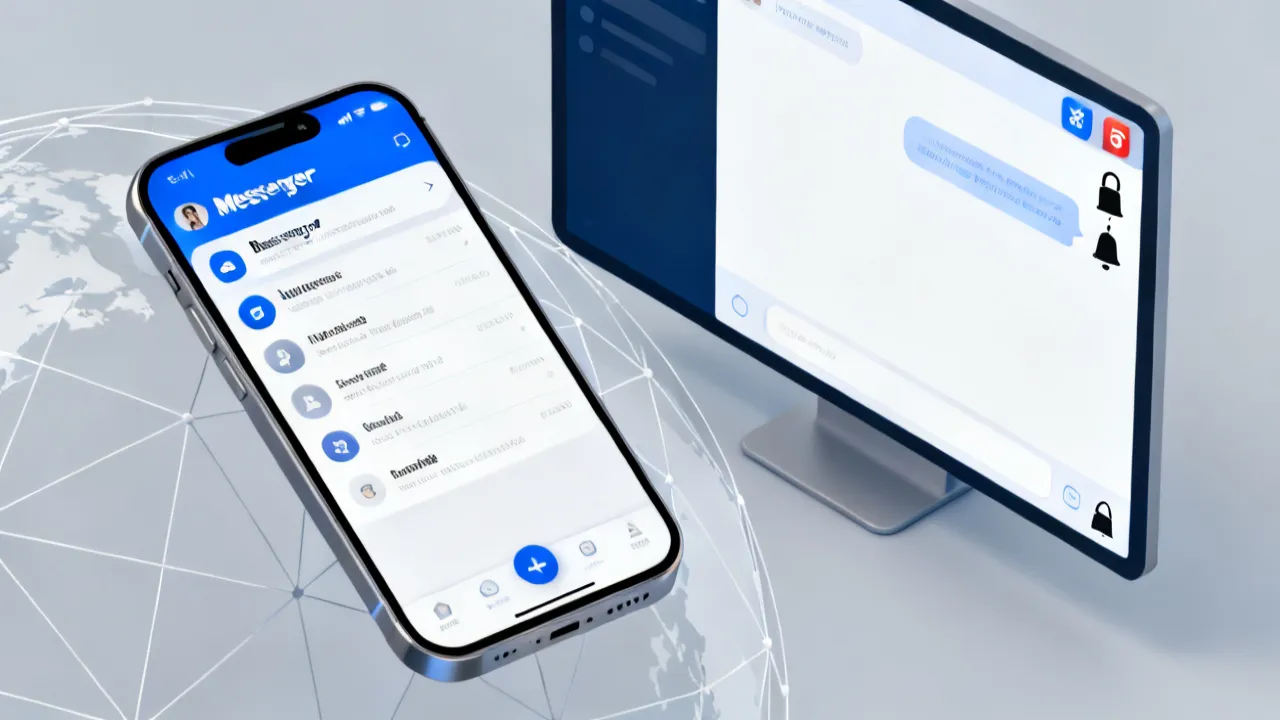
Messenger Strategy: Expert Guide to Secure Business Messaging
Messenger enables teams to coordinate faster, streamline customer conversations, and reduce operational friction. This guide explains what “Messenger” typically covers in business contexts and how organizations evaluate platforms for reliability, governance, and user experience. It then outlines practical comparison conditions, selection steps, and operational requirements based on expert industry perspectives and common compliance considerations.

How Messenger Shapes Reliable Business Communication
This guide explains how Messenger improves business communication through structured messaging, customer support workflows, and measurable engagement. “Messenger” is a general term for chat-based communication channels used by organizations and individuals. It supports quick replies, conversational context, and integration with customer service processes, helping teams respond consistently while maintaining service quality and transparency.