This guide explains how Messenger improves business communication through structured messaging, customer support workflows, and measurable engagement. “Messenger” is a general term for chat-based communication channels used by organizations and individuals. It supports quick replies, conversational context, and integration with customer service processes, helping teams respond consistently while maintaining service quality and transparency.

Messenger is most commonly understood as a chat-based communication channel that helps organizations respond faster, coordinate support tasks, and maintain conversational context. In practical terms, Messenger supports customer service, internal coordination, and relationship management by enabling teams to move from “inquiry” to “resolution” with fewer handoffs, less rework, and clearer next steps. For many businesses, the strategic value is not merely speed—it’s the ability to standardize communication, reduce response variance between agents, and create an auditable service trail.
In day-to-day operations, the difference between a well-designed Messenger channel and an ad-hoc chat thread is dramatic. A properly implemented Messenger workflow acts like a lightweight service engine: it collects the right information at the right time, routes messages to the correct queue or specialist, triggers the right internal actions (tickets, CRM updates, knowledge retrieval, and status notifications), and preserves context so the customer doesn’t have to repeat themselves. This reduces “operational drag”—the hidden time costs that come from bouncing customers between departments or relying on memory rather than structured processes.
From an industry-expert perspective, the most critical consideration is operational fit: how well Messenger aligns with your customer journey, service-level expectations, and escalation paths. When configured correctly, Messenger can function as the front door to support. Integrations—ticketing, CRM, knowledge bases, and analytics—help ensure that conversations translate into consistent outcomes rather than isolated back-and-forth. Without integrations and workflow discipline, Messenger can become noisy, difficult to measure, and prone to inconsistent answers.
Therefore, the “why” is twofold: (1) Messenger improves customer experience by reducing friction and uncertainty, and (2) Messenger improves operational reliability by turning informal messaging into a governable process with measurable performance. The organizations that benefit most are rarely the ones that simply “add a chat button.” They are the ones that redesign the service process so Messenger becomes the interface to the service system behind it.
The keyword “Messenger” commonly refers to an on-demand messaging capability—often a standalone app or an embedded chat feature—that allows users to contact a business or interact with staff in real time or near real time. Unlike static forms or email-only threads, Messenger-based workflows typically emphasize immediacy, conversational clarity, and ongoing context. Customers can ask questions, attach details (where policy permits), and receive responses quickly—often in a style that feels more natural than email.
However, “Messenger” in business doesn’t only mean the UI or the fact that people can type to each other. In an operational sense, Messenger represents a communications layer with specific behavior characteristics: message delivery, read/seen indicators (depending on platform), media sharing (within policy constraints), and the ability to route chats to the appropriate team or agent. These characteristics are particularly relevant in customer support environments where customers expect timely answers and where teams must avoid repeating questions already answered earlier in the conversation.
To evaluate Messenger as part of a business communication strategy, it helps to separate three layers:
Many organizations focus only on the channel behavior, then wonder why results are inconsistent. The better approach is to treat Messenger as a combination of channel + workflow + governance. In other words: the chat window is just the surface; the value comes from what happens around it.
Messenger can improve business communication when organizations treat it as a workflow system, not merely a chat window. The shift is operational and measurable. When designed well, Messenger supports several outcomes simultaneously:
For many companies, Messenger also supports a “closed loop” between support and other operational functions. For example, if billing-related chats spike, customer insights can trigger internal process improvements. If specific product questions recur, product documentation can be updated. If a particular category has poor resolution quality, QA and training can be adjusted. Messenger, when instrumented properly, becomes a channel for continuous operational learning.
Importantly, the guiding principle for readers evaluating Messenger is simple: the platform becomes valuable when it supports the service process end-to-end—from intake and diagnosis to resolution and follow-up. If Messenger only covers the intake moment, then other processes (ticketing, updates, refunds, troubleshooting, documentation) may still be handled inconsistently elsewhere. If Messenger is fully integrated into the service system, then the customer sees a cohesive journey.
Industry practice shows that the “best” Messenger setup is rarely about raw speed alone. Instead, it emphasizes clarity, customer reassurance, efficient next steps, and a smooth experience across the full conversation lifecycle. Consider these principles as practical design rules rather than abstract guidance.
Customers often judge service quality by whether they understand what will happen next. A short opening message that explains response handling, typical timelines, and escalation conditions helps reduce confusion and decreases redundant messages. When businesses align Messenger greetings with their published support policy, the experience feels consistent rather than improvised.
Expectation-setting doesn’t have to be verbose. Often, the highest value is a brief “service contract,” such as: what the agent can do immediately, what information they need, and what happens if the issue requires escalation. This reduces the cognitive load on customers and reduces the likelihood that they will send multiple follow-up messages out of uncertainty.
Even short messages can be designed for efficiency. For example, requesting only the essential information in a single bundle—such as order number, account identifier, or product details—can prevent repeated follow-ups. Where appropriate, use checklists or numbered questions so the customer can respond in one pass.
Think of each agent message as a “packet” that either advances the case or blocks it. When packets are incomplete, the conversation stretches. When packets are structured, the conversation compresses. In operational terms, structured message packets reduce average handle time and improve the perceived competence of the service team.
Practical examples of structured requests include:
A common operational failure is losing context during transfers between agents or departments. Strong Messenger workflows include a handoff method that preserves the conversation history so a new specialist does not ask the same questions again. This is a key determinant of customer trust.
Context preservation should include not only the full transcript, but also a structured summary and metadata. If you only pass raw chat logs, specialists may still need time to find the relevant details. If you pass both transcript and summary, you reduce time-to-resolution.
In mature implementations, handoffs often include:
Messaging channels may be used for documents, screenshots, and personal information. Organizations should apply privacy-by-design measures, such as limiting what staff request, using secure verification steps, and training agents on safe handling.
Compliance requirements vary by jurisdiction, so policies should align with relevant regulations and internal security standards. Even when regulations differ, the operational logic is consistent: treat messaging as a channel that may contain sensitive data and ensure you have a responsible process for intake, storage, retention, and access.
Privacy-by-design can include practical rules such as:
The keyword set you provided includes placeholders for price information and supplier details, but no concrete values were supplied. In that case, the most objective approach is to treat Messenger implementation as a purchasing and design decision with multiple cost drivers rather than a single fixed price.
In real-world deployments, Messenger-related costs typically depend on several variables. Organizations often underestimate “hidden costs,” such as integration effort, training, content maintenance, security reviews, and ongoing analytics/QA. If you consider only the headline vendor cost, you can end up with a solution that is technically functional but operationally expensive.
Common cost drivers include:
Supplier selection should focus on demonstrated support capability, integration maturity, security posture, and the supplier’s ability to meet your operational constraints. Rather than chasing the lowest headline cost, evaluate total cost of ownership across onboarding, staffing, maintenance, continuous optimization, and any “change management” you’ll need when business processes evolve.
When comparing suppliers, it’s useful to request specific implementation details, not just marketing claims. For example:
In operational purchasing terms, the best supplier is the one that reduces uncertainty: they show how they will support your workflow lifecycle—not only your initial launch.
Customer engagement has shifted over the last decade toward conversational channels—largely because customers want faster clarification and more interactive help. Messaging-based support can improve convenience and reduce friction when paired with well-designed workflows. For instance, a customer who receives an immediate response in Messenger often feels more in control of the situation, especially for issues like order status, account changes, basic troubleshooting, or service updates.
Major industry research and vendor analyses generally conclude that messaging-based support improves convenience when orchestration, routing, and analytics are strong. While specific performance figures vary across vendors and contexts, the directional conclusion remains consistent across research streams: service operations benefit when digital channels are treated as orchestrated workflows rather than simple messaging endpoints.
For readers seeking reliable grounding, consult:
Because your request did not provide specific country or city constraints, this guide remains location-neutral and focuses on universally applicable operational principles. In practice, you should align Messenger workflows with local regulatory requirements, internal security standards, and your industry’s data-handling expectations (especially in healthcare, financial services, and regulated e-commerce).
It’s also important to recognize that messaging is not “one size fits all.” Some industries use Messenger primarily for intake and routing; others use it for end-to-end troubleshooting and ticket resolution. The best architecture depends on your service complexity, customer expectations, and whether you can safely resolve issues within the chat channel without requiring phone calls or asynchronous follow-up.
Below is a supplement to the main discussion. It is structured as a comparison table, then a step-by-step guide, and finally clear conditions/requirements. (Per your instructions, no links are included in the table.)
| Option / Capability | What it enables in Messenger workflows | Top-fit scenarios | Key condition / requirement |
|---|---|---|---|
| Basic chat rollout | Simple two-way messaging for intake and updates | Low complexity support and early pilots | Clear triage rules to avoid agent overload |
| Routing + queues | Assign chats by topic, language, or customer tier | Multi-product support or multi-team operations | Consistent categorization taxonomy |
| CRM/ticket integration | Convert chats into tracked cases and unify customer data | Higher accountability and follow-up requirements | Data mapping and identity verification alignment |
| Knowledge-base assisted replies | Faster, more consistent responses using curated content | Common questions, product troubleshooting | Regular content review to prevent outdated guidance |
| Escalation and handoff controls | Move complex issues to specialists with context preserved | Technical support or compliance-heavy cases | Defined escalation criteria and SLA expectations |
| Analytics and QA reporting | Measure performance: response times, deflection, resolution quality | Optimization and continuous improvement programs | Instrumented events with privacy-safe logging |
Launching Messenger effectively requires more than turning on a chat widget or enabling a messaging account. The goal is to create a repeatable operational system that customers can rely on. The steps below are designed to build that system progressively, minimizing risk and enabling learning during the pilot phase.
A Messenger channel that launches successfully can still fail operationally if it is not sustained. Sustainability requires capacity planning, governance, and continuous quality management. The following conditions and requirements help ensure Messenger remains effective over time.
Messenger is used to handle customer support inquiries, provide order or service updates, manage sales questions, and coordinate issue resolution. It is particularly useful when customers expect quick interaction and when maintaining conversation context improves outcomes. It can also be used internally for operational coordination, but the same governance principles should apply if it contains sensitive information.
Often it complements them. Many organizations use Messenger for initial intake and troubleshooting, while more complex issues may still require email documentation, phone support, or expert escalation—depending on your service model and customer preferences. A common pattern is: Messenger for fast triage + email/ticket updates for formal documentation and longer resolution cycles.
Consistency usually comes from routing rules, knowledge-base assisted responses, approved templates, and QA monitoring. Training should include how to interpret the customer’s intent and when to escalate. Additionally, consistent “message structure” (summaries, next steps, required info checklist) helps customers experience uniform service quality even when different agents handle the conversation.
Common KPIs include first-response time, resolution rate, escalation accuracy, customer satisfaction signals (where available), repeat-contact rate, and average time to resolution. It’s also valuable to measure customer effort: how many messages it takes to reach resolution, how often customers must re-provide information, and how often conversations reach dead ends.
No, but integrations often improve reliability. CRM or ticketing integrations can make outcomes auditable, support follow-ups, and reduce duplicate work. At minimum, organizations should ensure that conversations can be categorized and reviewed for operational learning. If integrations are not available initially, you can still run a manual workflow—but you should plan to integrate soon if the channel scales.
Key considerations include access control for agents, secure handling of personal data, audit logging, and privacy-safe retention settings. If customers share sensitive information, your processes should include verification steps and clear boundaries on what is collected. Additionally, you should evaluate how attachments are handled and whether they are scanned for unsafe content according to your security policies.
Multilingual operations should use language detection or manual selection, routing to the appropriate language queue, and knowledge-base content curated per language. Consistency improves when templates and terminology are translated and reviewed, not merely auto-translated. For high-stakes support (billing disputes, medical advice, legal claims), you should ensure translations are validated by trained staff or subject-matter experts.
Start with a pilot focused on a limited set of topics, set realistic service standards, and monitor transcript patterns. Expand coverage once routing, staffing, and knowledge content prove stable. Use the pilot results to forecast volume and adjust capacity. Also define “shutdown or de-scope triggers” in case the channel generates unexpectedly high complexity or staffing constraints.
Messenger implementations fail when teams treat chat as an unstructured channel without workflow logic, governance, or operational planning. The most common issues include:
To avoid these pitfalls, build governance into the workflow: clear category definitions, escalation thresholds, knowledge maintenance cycles, and regular QA reviews. Also establish operational metrics tied to both efficiency and quality, not just speed. A slower conversation that resolves correctly on first contact can outperform a faster one that leads to escalations, refunds, or multiple reopenings.
From an operational standpoint, the top Messenger programs are designed to turn dialogue into outcomes. That means treating messages as structured steps—intake, diagnosis, solution delivery, verification, and follow-up—rather than as an informal exchange. This mindset helps teams focus on the “resolution state” of the conversation.
Even when customers send long messages, agents should respond using clarity patterns. The most effective conversational flow often looks like:
The goal is reducing customer uncertainty while keeping internal processes efficient. When customers feel guided, they send fewer clarifying messages. When agents have clear decision trees, they spend less time debating internally and more time executing resolution steps.
Several operational best practices support the conversation-to-resolution mindset:
Not all organizations use Messenger the same way, and operational design should reflect differences in product complexity, customer expectations, and risk level. Below are examples of how workflow design might vary across scenarios.
In ecommerce, Messenger often performs best when used for high-volume, well-structured tasks: order status, shipment tracking, delivery issues, and returns initiation. For these use cases, the workflow can be tightly controlled:
Because customers often expect fast updates, the first response and the quality of the next-step plan are particularly important. If the agent cannot provide the exact status immediately, the workflow should set realistic expectations (e.g., “We’ll update you within X hours after the carrier confirms.”).
For software support, Messenger can be valuable for guided troubleshooting. However, complexity is higher and escalations must be robust. The workflow often includes:
In these environments, knowledge-base assisted replies can speed up responses, but only if the troubleshooting steps are accurate and tested. Stale guidance is particularly harmful in technical contexts. QA and knowledge version control are critical.
In healthcare or similarly regulated sectors, Messenger may be limited to certain types of support: appointment scheduling requests, informational guidance, and navigation to appropriate service pathways. For sensitive issues, identity verification and privacy-by-design rules must be strict.
Operationally, workflows should define what can and cannot be done via chat. For example:
In such settings, “conversation-to-resolution” may mean routing to a safe and approved pathway rather than resolving everything inside Messenger.
In logistics, Messenger can act as a coordination tool for customers, dispatchers, and field teams. Workflow success depends on context preservation and integration with operational systems:
A common best practice is to standardize “status message types” so that agents use consistent language and customers understand changes quickly. Consistent status templates reduce confusion, which reduces inbound questions.
Messenger can also be used for internal coordination—such as IT helpdesk intake, facilities coordination, or onboarding assistance. In internal scenarios, the same workflow logic applies, but the risks differ. Privacy may be lower, but confidentiality and audit requirements may still exist.
Internal Messenger workflows benefit greatly from:
Many organizations start with response time as the primary KPI because it’s visible and easy to track. While it’s important, response time alone does not indicate whether Messenger improves outcomes. A comprehensive measurement approach should combine efficiency, quality, and customer effort.
Consider the following measurement dimensions:
When you measure across dimensions, you can identify what to fix. For example:
As organizations mature, they move from basic routing and templates toward more advanced patterns that improve quality and scalability. These patterns must still be governance-driven rather than “automation for automation’s sake.”
Even if you start with manual categorization, designing triage to be intent-based helps. You can use rules (keyword patterns, structured prompts, or menu-based selection) to guide customers into the right resolution path quickly.
Operationally, the triage experience matters. If customers can choose an issue type from a shortlist and then answer a couple of structured questions, you reduce variance in customer messaging. Agents then see a more predictable intake, which improves response quality.
Handoffs improve dramatically when there is an automated or semi-automated conversation summary that highlights what matters. A summary can include:
This reduces the cognitive load on the receiving specialist and makes it easier to audit why certain decisions were made.
Many conversations fail to close cleanly because the agent does not confirm closure conditions. A resolution checklist ensures that closure only occurs when key outcomes are satisfied, such as:
Closure gating reduces reopen rate and improves customer trust.
If you use knowledge-base assisted replies, ensure recommendations are aligned to the correct product version, region, and policy version. Outdated knowledge causes harm and increases recontact. Version control is not optional in mature systems.
Operationally, teams should:
Some organizations introduce chatbots or automated prompts to handle simple questions. Even if automation is limited, you need safe fallback rules—when the system is uncertain, it should transfer to a human. The goal is to avoid frustrating loops where customers repeat themselves or receive generic answers that do not resolve the issue.
Automation is most effective when:
Because Messenger workflows often include personal data (order identifiers, contact details, sometimes sensitive issues), security and privacy become operational requirements, not afterthoughts. Trust is essential: if customers fear their data is mishandled, they will avoid messaging or abandon the conversation.
Operational security and governance often includes the following themes:
It is also important to consider that Messenger can be used for “human error” if not governed. A common issue is agents accidentally sharing internal information, miscommunicating policies, or requesting more data than necessary. QA and training reduce such risks, but only if policies and templates are clear and enforceable.
For sensitive verticals, consider adding additional guardrails:
Messenger is more than a chat interface—it is a service channel that can strengthen reliability, accelerate support, and improve customer experience when paired with routing, knowledge management, privacy controls, and analytics. Businesses that approach Messenger as an integrated workflow system—rather than a standalone messaging tool—tend to deliver more consistent results across time, teams, and issue types.
The real success factor is design discipline: treat every conversation as a structured process. Build a triage taxonomy that routes requests correctly. Preserve context in handoffs. Use message structure to minimize back-and-forth. Maintain knowledge and templates as living assets. Measure performance across resolution quality and customer effort, not only speed. And ensure privacy-by-design controls that keep the channel trustworthy.
If you want, share your industry (e.g., ecommerce, logistics, healthcare, software support) and the primary use case you have in mind. I can tailor the Messenger workflow design, KPI set, and escalation conditions to your operational reality.
A Guide to Cost-Efficient Small Electric Cars for Seniors

Mastering Debt Consolidation: Boost Your Credit Score and Manage Interest Rates

Your Guide to Loans, Credit Checks, and Interest Rates

Affordable Independent Living: Finding the Right Senior Housing

Guide to Senior Living Apartments: Affordable and Comfortable Environments

Leasing a Car: Expert Tips for Your Next Vehicle

Maintaining Oral Health After Tooth Loss with Dental Implants

Maintaining Oral Health with Dental Implants for the Elderly

Jose Raimundo Cardoso: Professional Insight and Context


Understanding 4m Product Sourcing and Supplier Options
This guide explains how 4m buyers evaluate supplier options, pricing factors, and quality controls for consistent procurement outcomes. Objectively, “4m” is often used in sourcing and operations contexts to describe a structured set of variables—commonly manpower, machine, method, and material—though its meaning can vary by industry and region.

How Messenger Shapes Secure Business Communications
This guide explains how Messenger supports everyday business messaging with a focus on reliability, governance, and practical implementation. It provides objective background on messaging platforms—covering message delivery, identity verification, and organizational risk controls—so teams can make informed decisions about how they structure conversations, permissions, retention, and user training.

Strategic Use of Messenger for Modern Businesses
This guide explains how to plan, operate, and measure Messenger-style communications for reliable customer support and sales workflows. It provides objective background on messenger platforms, typical adoption goals, and operational considerations such as governance, security, and response-time discipline. Readers will also find practical conditions and step-by-step setup guidance to improve consistency across teams.

Messenger Top Practices for Reliable Business Chat
Messenger is a practical guide to building dependable, professional business chat. It explains how messaging workflows, governance, and supplier selection influence reliability and customer trust. The article then compares key implementation approaches, outlines requirements and conditions, and provides expert-backed FAQs on security, response quality, and operational readiness.
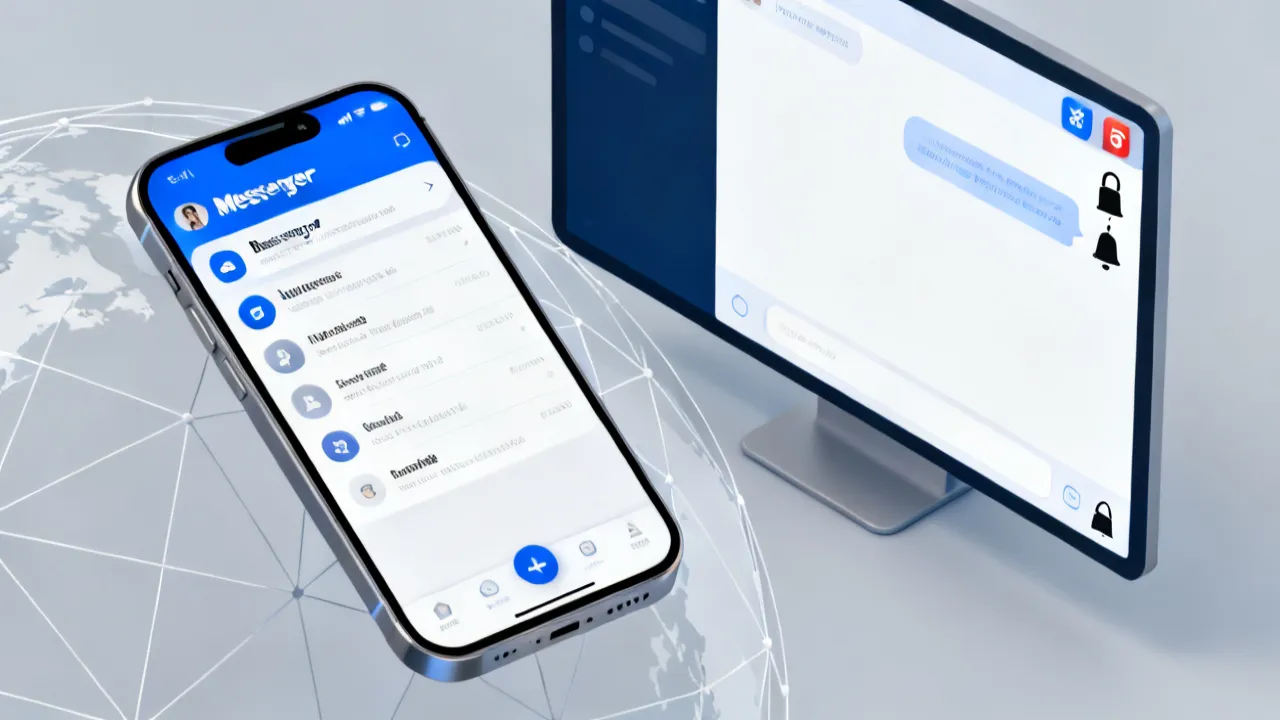
Messenger Strategy: Expert Guide to Secure Business Messaging
Messenger enables teams to coordinate faster, streamline customer conversations, and reduce operational friction. This guide explains what “Messenger” typically covers in business contexts and how organizations evaluate platforms for reliability, governance, and user experience. It then outlines practical comparison conditions, selection steps, and operational requirements based on expert industry perspectives and common compliance considerations.
How Messenger Shapes Reliable Business Communication
This guide explains how Messenger improves business communication through structured messaging, customer support workflows, and measurable engagement. “Messenger” is a general term for chat-based communication channels used by organizations and individuals. It supports quick replies, conversational context, and integration with customer service processes, helping teams respond consistently while maintaining service quality and transparency.