This guide explains how to evaluate and choose internet service in IPATINGA MG, comparing major provider options and what to check before ordering. It reviews common plan structures (speed tiers, upload symmetry, contracts, equipment fees, and data policies) and translates them into practical decision criteria. Background context is provided for fiber, cable, and fixed wireless technologies.
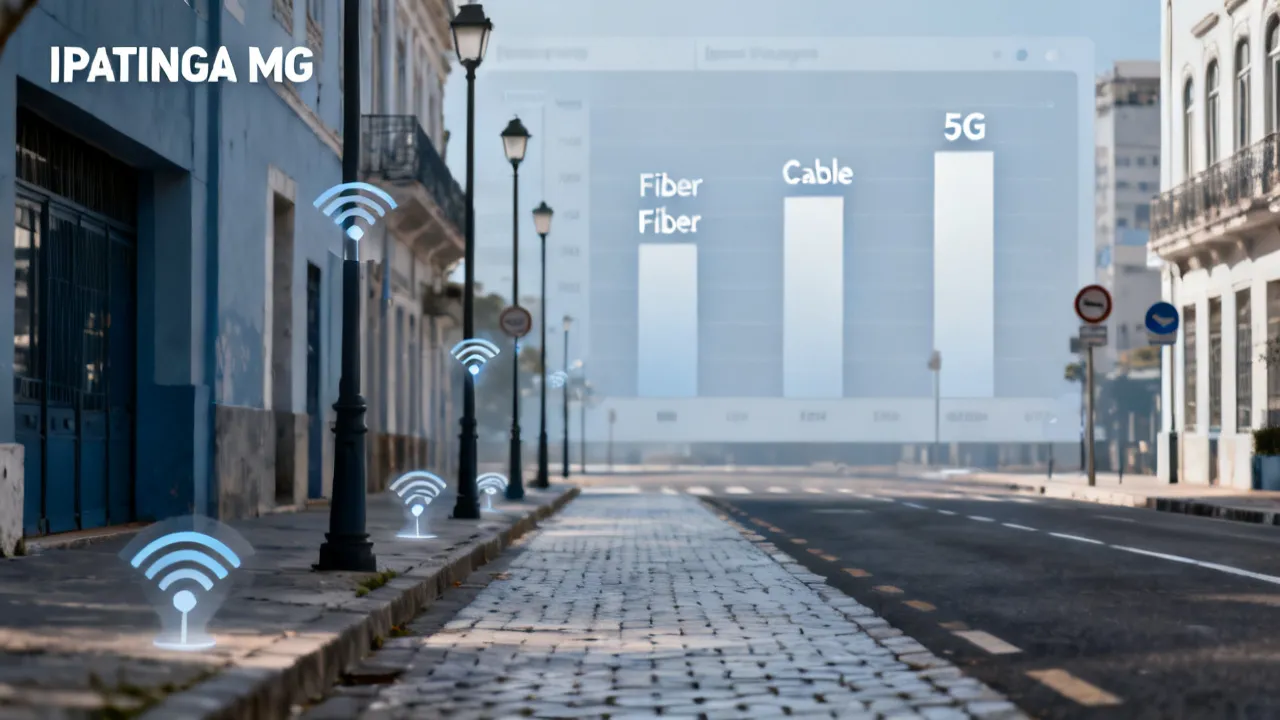
If you’re searching for reliable Internet in IPATINGA MG (often shortened by locals to “Internet near me” searches), the very important decision is not just the advertised download speed—it’s the type of connection (fiber, cable, or 5G fixed wireless), how the plan handles upload speeds, whether there are equipment or modem/router costs, and what happens to pricing after any introductory period. In practice, the “top” provider is the one whose network performance matches your household’s usage pattern—video conferencing, gaming, streaming, work-from-home file uploads, and multi-device Wi‑Fi.
In other words, the “best internet” is rarely the one with the largest headline number. It’s the one that behaves predictably throughout the day—especially during evenings—while keeping your total monthly spending under control. IPATINGA MG households often discover that a plan that looks great on paper can still feel frustrating if the connection technology isn’t ideal for their specific building conditions, router placement, device capabilities, or peak-hour congestion patterns.
So the best approach is to treat internet selection like a practical engineering problem: match access technology to your real-world needs, verify the terms that affect long-term cost and performance, and ensure your home Wi‑Fi can actually deliver the speed your plan promises.
Below is a structured comparison of representative plan options from major providers referenced in this guide. Because availability and pricing can vary by address in IPATINGA MG, treat this as a plan-design comparison, not a guaranteed quote.
| Provider / Technology | Typical packages & price points | Additional services & conditions to check |
|---|---|---|
| Xfinity (cable) | Introductory tiers around $19.99/mo (up to 50 Mbps) and $39.99/mo (up to 100 Mbps) | No contracts noted for these tiers; includes access to Xfinity Wi‑Fi hotspots; equipment rental may be offered around $14/mo for some plans |
| AT&T Fiber (fiber) | $55/mo (300 Mbps), $65/mo (500 Mbps), $80/mo (1,000 Mbps) | Symmetrical upload/download speeds typical of fiber; autopay discount referenced around $10/mo; Wi‑Fi gateway included |
| Spectrum (cable) | Introductory around $50/mo (up to 500 Mbps) and $70/mo (up to 1,000 Mbps) | Unlimited data and no contracts stated for these options; modem included; optional Wi‑Fi service may add about $5/mo and prices can change after the first year |
| T‑Mobile 5G Home Internet (fixed wireless 5G) | Ranges roughly $35–$70/mo, with speeds stated between 72–245 Mbps | Fixed wireless 5G—often useful where wired services are limited; discounted rates may apply for customers on certain mobile plans |
| Astound Broadband (cable) | Introductory starting around $20/mo (up to 300 Mbps) | Regional availability; low-cost cable internet framing; some plans include a two-year price guarantee |
| Verizon Fios (fiber) | $49.99/mo for 300 Mbps (with autopay referenced) and $89.99/mo for 1 Gig | Fiber with symmetrical speeds; Wi‑Fi router included at no extra cost per referenced plan details |
Source of plan details used for the comparison:
source: www.xfinity.com
source: www.att.com/internet/fiber
source: www.spectrum.com
source: www.t-mobile.com/isp
source: www.astound.com
source: www.verizon.com/home/fios
As an industry-focused framing, I encourage you to evaluate plans using a three-layer checklist: (1) Access technology, (2) Service terms, and (3) End-to-end customer experience.
Many internet shoppers only compare numbers on a screen—“up to 500 Mbps” or “up to 1 Gbps.” But home internet is a chain: the provider’s network + the local last-mile connection + the ISP’s traffic management + your equipment + your Wi‑Fi coverage + your devices. The weak link determines your experience.
In IPATINGA MG, neighborhoods and building types can influence last-mile performance. Even if the ISP offers a high tier, your building’s internal wiring, the number of apartments on a shared cable segment, or the quality of the fiber/termination can influence stability. Similarly, fixed wireless 5G performance can change if the gateway placement is suboptimal or if nearby interference conditions shift.
To make this concrete, consider common household scenarios:
It’s worth emphasizing that the “total cost of ownership” concept goes beyond equipment rental. Consider also:
Even with a high-speed plan, many users experience “slow internet” due to Wi‑Fi coverage gaps, interference, or device bottlenecks. A professional approach is to treat the ISP service and your internal Wi‑Fi as two separate systems. If you live in a two-story home or have thick walls, consider:
A key idea: when someone says “my internet is slow,” it may actually mean one of several things:
Cost optimization usually comes from a disciplined process rather than a single “coupon.” Below is a practical sequence you can follow, written for readers who want a lower monthly bill without sacrificing reliability.
In practice, “cheap internet” can mean two different things: low monthly price right now, or low effective monthly price over the full life of the service. Many promotional plans look inexpensive for the first 6–12 months, then rise—sometimes with equipment charges that become obvious later. A disciplined shopper calculates the effective cost and verifies that the service still fits after promo pricing ends.
List the main online activities at home: streaming hours, video calls, online gaming, work video conferences, cloud backup, and the number of simultaneous users. Then choose a plan speed that supports peak use. If you work with large uploads (design files, video edits, backups), prioritize technologies that deliver stronger upload performance.
To make this more tangible, consider a few common patterns in Brazilian households and similar usage styles (even if pricing differs by region):
Many plans use introductory pricing for the first year. The referenced cable examples show starting prices at lower rates (e.g., $19.99/mo, $39.99/mo, or $50/mo for higher tiers), while real cost may rise after the promo. Ask: What is the monthly rate after the introductory period?
But also ask a second question: “Does the plan include the same speed tier after promo?” Sometimes companies change marketing tiers or equipment settings. While the advertised speed should remain consistent, the effective experience can differ if the included equipment is weaker at the time of sale, or if the plan includes promotional performance upgrades that are later removed.
When equipment rental is mentioned (for instance, a referenced figure around $14/mo), include it in your monthly effective price. Conversely, if the plan includes a Wi‑Fi gateway or router at no extra cost (as referenced in fiber examples), you may avoid separate rental fees.
To avoid surprises, write down an “effective monthly cost” formula:
Even a small $10–$20/month difference can become significant over 2–3 years. That’s why a plan that seems $20/month cheaper during promo might become more expensive later.
Some providers offer optional Wi‑Fi services (e.g., around $5/mo in one referenced cable example). If you already have a compatible router or can improve placement, you might not need the add-on. However, ensure compatibility with the provider’s equipment model.
Here are add-ons that often look optional but can affect the experience:
Autopay discounts can reduce monthly charges (a referenced fiber example indicates an approximate $10/mo autopay benefit). The key is whether autopay remains active and whether you can meet any eligibility requirements.
Also consider whether your discount is conditional on other actions:
Many people experience unexpected price increases when autopay fails for even one billing cycle. A good habit is to keep payment methods updated and set payment date reminders.
If you’re considering fixed wireless 5G, cost can be attractive, but you must verify whether the signal is stable indoors. In practice, the top approach is to request service availability for your specific address and confirm the provider’s return/cancellation policies if performance is not acceptable.
Fixed wireless home internet is sensitive to factors such as:
A practical checklist for fixed wireless households:
While exact promotions vary, some households can reduce early fees by scheduling installation off-peak periods or selecting service tiers that align with other recurring bills. If bundling (mobile + home internet) is available, evaluate the bundle price rather than focusing only on the internet component.
Bundling can reduce cost, but it can also lock you into a combined service relationship. If the internet is the priority and mobile usage is flexible, compare:
Also remember that some installations require outside work (pole attachment or connection to a street infrastructure). You want clarity on the timeline and who is responsible for property preparation (for example, unobstructed access routes for cabling).
Because “Internet” costs differ by country due to infrastructure buildout, competition levels, and regulatory conditions, the following ranges offer a broad planning perspective. Use them to frame expectations, then confirm local quotes for your specific location.
| Region | Typical monthly price range | Common speed/technology notes |
|---|---|---|
| United States | ~$30–$100+ (varies widely by speed tier and area) | Fiber and broadband options are often available; high-speed tiers (around 100 Mbps to 1 Gbps) are generally priced higher. |
| United Kingdom | ~£25–£60+ | Many areas can choose fiber or other broadband options; speeds commonly fall around 30–100 Mbps. |
| Canada | ~CAD 50–CAD 100+ | Fiber and broadband packages vary; speeds often range from roughly 25 Mbps up to 1 Gbps. |
| New Zealand | ~NZD 60–NZD 100+ | Common choices include fiber or VDSL; speeds can reach 100 Mbps or more depending on the area. |
| Australia | ~AUD 60–AUD 110+ | Fiber coverage is expanding; typical speeds often sit around 50–100 Mbps where common plans are available. |
| Singapore | ~SGD 30–SGD 60+ | Competition and coverage are relatively strong; fiber can reach up to 1 Gbps in many places, contributing to lower pricing pressure. |
Even though those numbers are presented as baseline examples, the decision framework still holds for IPATINGA MG: focus on technology fit, long-term price stability, upload performance, and the quality of the equipment/implementation.
For very homes, you don’t need to buy the maximum marketed tier—unless your household has heavy upstream demands. Consider the following rule-of-thumb approach (qualitative, not a strict formula):
Here is a practical way to avoid overbuying:
Before switching providers in or near IPATINGA MG, confirm the following operational details. This checklist helps avoid common “plan mismatch” issues.
| Check area | What to ask/confirm | Why it matters |
|---|---|---|
| Service availability | Does the provider offer service at your exact address? Any building-level limitations? | Availability can vary block-by-block; fixed wireless performance can also depend on placement. |
| Promo end date | What is the monthly price after the introductory period? | Many low first-year prices increase later; budgeting requires knowing the full lifecycle cost. |
| Equipment details | Is the modem/router/gateway included, rented, or purchased? Any installation fees? | Total cost includes hardware and potential technician setup charges. |
| Speed characteristics | Is upload speed symmetrical or reduced? Are speeds “up to” and subject to contention? | Upload performance impacts calls, cloud collaboration, and backups. |
| Wi‑Fi coverage | What Wi‑Fi band(s) and range does the included equipment support? | Coverage limitations can make a high-speed plan feel slow. |
| Data policy | Is data truly unlimited under all conditions? Any fair-use rules? | Some policies can affect heavy users during peak or extended sessions. |
To make the “confirm before ordering” step even more effective, ask for one thing most customers forget: what test results you can expect during installation. For example, request that the technician verifies signal strength for fixed wireless (if applicable) and checks that the modem/gateway establishes a stable connection and correct configuration for fiber/cable.
Also confirm whether you can use your own router. Many customers prefer controlling the home network themselves (mesh system, VLANs for work devices, parental controls, advanced QoS). Some ISPs require specific modem/router compatibility. Knowing this upfront can prevent a costly scramble after installation.
Finally, consider where the internet handoff will occur. You want to plan for:
Plan-detail source links used in the comparison above are the official provider websites, as listed in the “Source” section immediately after the table.
For streaming and general browsing, download speed is often the main factor. For video conferencing, cloud backups, and collaboration tools, upload speed can matter as much as download. Fiber plans are often promoted as delivering symmetrical upload/download speeds, which can better support these use cases.
If you want a practical “self-test,” think about what you do most during work or school hours:
No-contract plans can be cost-effective because they reduce good lock-in risk. However, “top price” depends on promo-end pricing, equipment rental fees, and any installation charges. Always compare the effective monthly cost across the first 12–24 months.
One more nuance: pricing might also change if you add/remove equipment or service features. Some providers offer “managed Wi‑Fi” or other enhancements that reduce performance issues but increase monthly cost. If you choose those add-ons, evaluate whether you could instead buy a mesh system outright.
If the provider includes a gateway/router, check whether the Wi‑Fi range and performance suit your home layout. Renting equipment may be convenient but adds monthly cost. If you plan to use your own router or mesh system, confirm compatibility with the ISP’s modem/gateway setup.
To decide, consider time horizon:
Fixed wireless can be attractive when wired services are limited. Reliability depends on radio conditions and gateway placement. A good practice is to verify performance expectations during installation and understand the provider’s service terms if the signal is weaker than anticipated.
Reliability in fixed wireless often reveals itself in patterns: you may get high download speeds at one time and lower speeds at another, particularly during evening hours. If reliability is critical (for example, daily remote work), you may prefer fiber if available.
Focus on: (1) promo-end pricing transparency, (2) total monthly cost including equipment, (3) avoiding unnecessary add-ons, (4) using discounts you can maintain (for example, autopay requirements), and (5) selecting speed tiers that match actual usage patterns.
Another cost-control strategy: avoid “marketing upgrades” you don’t need. Many households can function with mid-tier plans if Wi‑Fi is well configured. If the router is weak, upgrading the contract speed will not fix dead zones. The order of operations matters: first confirm ISP throughput, then fix Wi‑Fi placement and settings.
Use Ethernet (if available) to test throughput from your device. If Ethernet speeds are strong but Wi‑Fi is weak, the issue is likely internal networking—placement, interference, or router capability. If both are weak, it may be ISP-side congestion, line quality, or plan limitations.
To strengthen your diagnosis, do three tests:
If you detect packet loss or high jitter, note the time and run the tests multiple times. This helps when contacting customer support and can speed up resolution.
Finding the very suitable Internet near me option in IPATINGA MG is top approached as a system decision. Choose the access technology that matches your needs—fiber for consistent symmetrical performance, cable for strong download tiers, and fixed wireless 5G when wired options are constrained. Then evaluate service terms (promo-end pricing, equipment rental or inclusion, autopay discounts, and data policies) to compute your real monthly cost. Finally, treat Wi‑Fi coverage and device environment as part of the solution; even a strong ISP plan can underperform if your home network is not designed for your layout.
To close the loop, the best long-term “optimization habit” is to measure regularly—especially during the first two weeks after installation. Test at different times of day, verify that the Wi‑Fi is stable where you use your devices most, and confirm that uploads behave well during calls and backups. If you do this early, you can correct setup issues before they become recurring frustrations.
Disclaimer: The above information comes from online resources, and the data is as of October 2023. The specific access requirements and methods are subject to the official requirements of the Internet service provider. This website will not be updated in real time.
A Guide to Cost-Efficient Small Electric Cars for Seniors

Mastering Debt Consolidation: Boost Your Credit Score and Manage Interest Rates

Your Guide to Loans, Credit Checks, and Interest Rates

Affordable Independent Living: Finding the Right Senior Housing

Guide to Senior Living Apartments: Affordable and Comfortable Environments

Leasing a Car: Expert Tips for Your Next Vehicle

Maintaining Oral Health After Tooth Loss with Dental Implants

Maintaining Oral Health with Dental Implants for the Elderly

Jose Raimundo Cardoso: Professional Insight and Context

Internet Plans in IPATINGA MG: Expert Comparison
This guide explains how to evaluate and choose internet service in IPATINGA MG, comparing major provider options and what to check before ordering. It reviews common plan structures (speed tiers, upload symmetry, contracts, equipment fees, and data policies) and translates them into practical decision criteria. Background context is provided for fiber, cable, and fixed wireless technologies.
Internet Options for Vitrali Moema Residents
This guide helps you compare Internet plans that may work well for Vitrali Moema residents, from fiber and cable to 5G home broadband. It also outlines objective background on common ISP offerings, how pricing and speeds typically vary, and which connection types fit different household needs. Finally, you’ll find practical cost-reduction steps and regional price context to support better decisions.
Choosing Internet Plans: Xfinity, AT&T Fiber, Spectrum and More
This guide compares major US internet providers—Xfinity Internet, AT&T Fiber, Spectrum Internet, T-Mobile 5G Home Internet, Astound Broadband, and Verizon Fios—to help you choose a plan by speed, cost, and service terms. It also explains practical ways to reduce monthly bills, outlines typical price ranges across multiple countries, and ends with FAQs and an industry-oriented checklist.
How to Choose the Top Internet Provider for Your Home
Choosing the right home internet plan depends on speed, pricing, reliability, and equipment terms. This guide reviews major U.S. options using objective criteria, then explains practical ways to lower monthly costs through eligibility checks, promo timing, and modem/router decisions. It also provides a regional pricing overview and a checklist for comparing offers.
How to Choose Reliable Internet Providers in 2023
This guide explains how to evaluate major internet providers and select a plan that fits your speed needs and budget. It objectively outlines how Xfinity Internet, AT&T Fiber, Spectrum Internet, T-Mobile 5G Home Internet, Astound Broadband, and Verizon Fios differ by technology, pricing structure, and equipment terms, then offers a low-cost access strategy and practical decision criteria for everyday users.
Tenda Salvador: Choosing Internet Providers Nearby
This guide helps you compare internet packages focused on “Tenda Salvador” and practical connectivity needs. It explains what “Tenda Salvador” typically represents in local internet selection, then reviews major provider types (fiber, cable, fixed wireless), typical package structures, and how to evaluate speed, reliability, equipment fees, and contract terms.