This guide explains how Multishop enables multi-vendor operations, clearer product management, and smoother supplier coordination. Objectively, “Multishop” in e-commerce usually refers to platforms that support multiple storefronts or vendor catalogs under one operational framework, helping brands standardize onboarding, catalog rules, and fulfillment workflows—while still allowing localized merchandising decisions and governance controls.
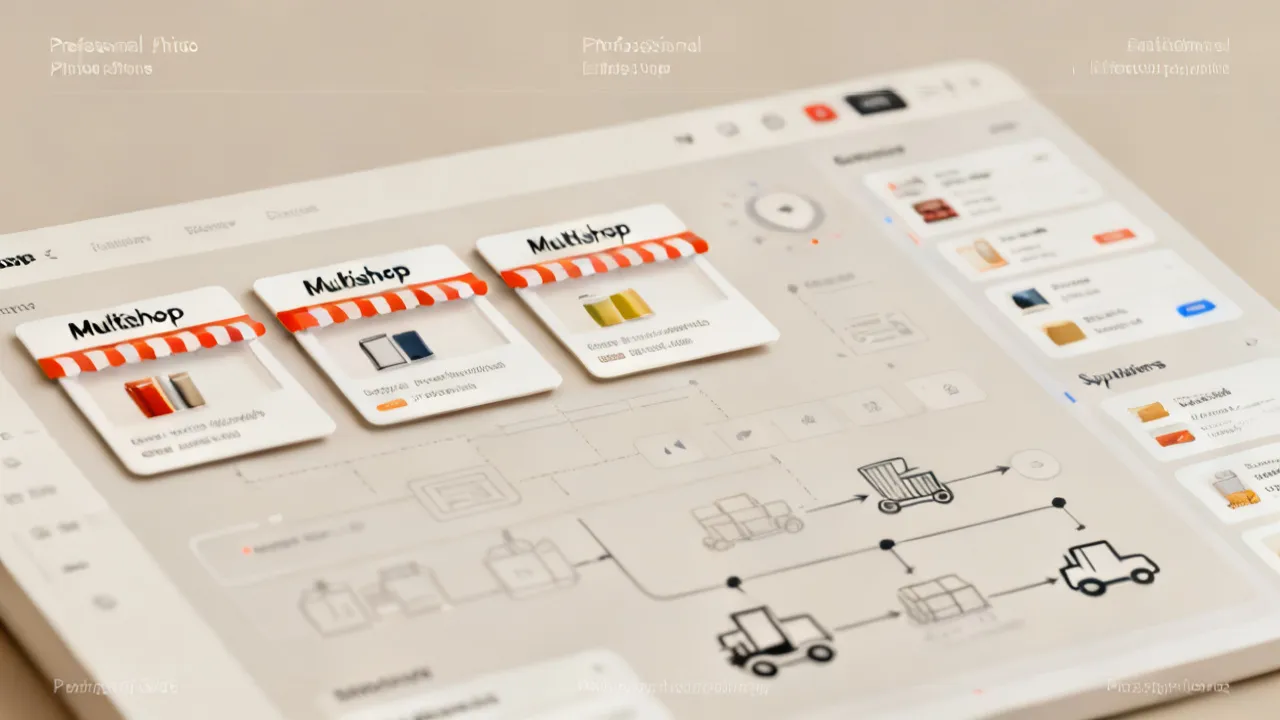
When businesses outgrow a single storefront, Multishop becomes a practical way to structure multi-shop operations—typically by centralizing product governance, vendor management, and storefront publishing into a unified system. The very important reason organizations evaluate Multishop is to reduce operational friction: instead of managing catalogs, pricing logic, and supplier inputs separately across every shop, teams can implement consistent workflows and controlled variations per storefront. This is especially relevant for organizations that must coordinate multiple suppliers, maintain coherent product data, and still deliver a distinct customer experience per shop.
From an industry perspective, the key differentiator is not simply “having many shops,” but how well the platform supports workflow discipline: roles and permissions, product data standards, catalog synchronization rules, supplier onboarding steps, and auditability. Done well, Multishop can help reduce catalog drift, improve response times for merchandising changes, and make supplier collaboration less error-prone.
In practice, that means the platform is not just a way to host multiple websites. It is a governance and integration layer that helps align the entire organization—merchandising, procurement, finance, customer support, and operations—around shared definitions of “what a product is,” “how a price is derived,” and “who is allowed to publish or modify what.” When those definitions are strong, teams can scale faster and make changes more safely, even while serving different market segments and customer journeys.
However, the same organizations that benefit most from Multishop are also the ones most likely to underestimate implementation complexity. Multi-shop environments can create a false sense of simplicity: “We’ll just duplicate the storefront and tweak a few things.” In reality, duplication without governance leads quickly to inconsistent attributes, overlapping promotions, contradictory availability rules, and supplier submissions that “mostly work” until they don’t—right when the business needs reliability the most.
Therefore, the most effective way to evaluate Multishop is not to ask, “Can it create multiple stores?” Instead, ask: “Can it enforce operational rules that keep product, pricing, and supplier content consistent while still allowing purposeful differences between shops?” If the platform supports a clear hierarchy for data and rules, plus visibility into what changed and why, it becomes a strategic capability rather than a technical add-on.
Multi-store commerce is no longer niche. Many brands, wholesalers, and category specialists operate multiple storefronts to serve different customer segments, languages, or regions, even when inventory and procurement remain centrally managed. Some businesses operate multiple shops because they sell through different channels or business units; others do it to separate consumer-facing experiences from wholesale experiences, or to provide region-specific compliance content.
In such contexts, Multishop frameworks are often evaluated for their ability to:
Importantly, organizations adopting Multishop should treat “multi-shop” as a system design problem, not only a UI problem. The platform’s strongest value typically shows up after the first few shops—when changes start to cascade across catalogs, pricing rules, promotions, and supplier-provided content. Early on, differences between shops might appear small: one store uses a slightly different description, another store uses different filters, or a third store includes a localized set of banners. Later, the differences become entangled with the underlying data model and integration points. That is the moment when workflow discipline becomes critical.
To see why this matters, consider a typical growth path. Initially, a business might manage product entries manually or through relatively simple imports. As the business adds suppliers, those imports become frequent and more varied. Then marketing begins to request more localized promotions, seasonal categories, and curated collections. Meanwhile, finance changes tax rules or shipping logic due to accounting policy revisions. Multishop becomes the mechanism that ensures these changes can be managed systematically rather than in a patchwork of manual edits.
Even when a team is highly capable, the operational load increases quickly. The more shops you have, the more you must coordinate:
Multishop is therefore relevant not just for web administrators but for business stakeholders who need predictability. If a merchandising update can be rolled out to multiple shops safely, the organization can respond to market changes faster. If supplier updates can be processed with fewer errors and clearer accountability, the organization can reduce downtime in catalog availability. If price changes can be traced and reconciled, the organization can reduce customer disputes and finance surprises.
In marketplace and multi-store scenarios, the phrase “price information” often becomes more complex than a simple number on a product page. Even if a business uses a consistent base price, differences may arise from tax treatment, local shipping rules, currency conversion, or promotional constraints. In a well-implemented Multishop setup, price logic should be governed by explicit rules rather than ad-hoc edits.
To evaluate whether Multishop is appropriate, scrutinize how it handles:
In many organizations, pricing is where operational risk concentrates because it affects both customer trust and financial reporting. For example, a shop might show a promotional price due to campaign constraints that do not apply to other shops. If a synchronization rule is too aggressive, updating base pricing might overwrite the promotional price inadvertently. Similarly, if supplier cost updates are applied without clear separation between “cost inputs” and “sell prices,” a supplier update could cause unintended pricing swings.
Therefore, a good Multishop architecture typically provides at least two conceptual layers:
When those layers are explicit, you reduce the chance of “mysterious price changes” that are difficult to debug. You also make reconciliation easier because finance can test the calculation logic and verify that the output matches policy.
On the supplier side, “supplier details” should be viewed as structured operational data, not just contact information. A robust Multishop environment typically supports vendor metadata such as agreed product scope, attribute requirements, content submission standards, service-level expectations, and compliance documentation workflow. This matters because supplier-driven catalog inaccuracies tend to create customer-facing problems—returns, cancellations, chargebacks, and support escalations.
In practical terms, supplier onboarding should include more than “how to send a file.” It should include:
When those steps are part of the system workflow, supplier collaboration becomes measurable. Instead of debating whether a supplier “usually does a good job,” teams can track acceptance rates and error categories—then fix root causes rather than repeating repetitive manual cleanup.
Multishop implementations succeed when they integrate with the rest of the commerce stack. In practical terms, the platform must coordinate order intake, inventory visibility, fulfillment routing, returns handling, and reconciliation. An expert assessment usually focuses on whether the platform can maintain operational clarity when multiple shops and vendors share common systems.
Consider these integration themes:
Inventory logic is often underestimated. Many organizations assume that if inventory is “central,” it will automatically be correct everywhere. In reality, availability can vary due to fulfillment constraints, shipment origin, or different shop-level fulfillment commitments. For example, one shop might promise faster delivery because it ships from a particular region, while another shop might route orders differently due to supplier lead times. A Multishop system must therefore support availability calculations that reflect the actual customer promise for each shop.
Likewise, reporting must be segmented by shop. Otherwise, leadership gets a misleading view of performance and cannot diagnose where operational bottlenecks come from. If returns increase, is it because a specific shop is showing inaccurate compatibility information? Or because a specific supplier’s attributes are incomplete? Or because a localized description in one shop reduces purchase intent quality? Multishop helps if it can maintain product lineage and shop-level mapping, so analysts can ask precise questions.
Integration also includes auditability. When multiple shops and vendors are involved, you need to know what changed at the time it changed. For example, if customers report an incorrect warranty term, you should be able to trace:
Multishop systems with good governance make this kind of debugging possible. Systems that do not enforce discipline force teams into log archaeology, which is expensive and slow under time pressure.
Finally, the operational integration must respect the realities of the order lifecycle: payments, cancellations, backorders, stock transfers, and refunds. A Multishop architecture should ensure that shop identifiers remain consistent through the full customer journey so that operational actions correctly update the relevant shop policies and reporting dimensions.
Even with strong backend governance, customers ultimately experience the storefront interface, search quality, and product clarity. Multishop can improve user experience when storefronts are distinct but consistent in product data quality. That balance—variation for merchandising, standardization for accuracy—is where many teams find the “sweet spot.”
For example, if one shop targets a premium segment while another focuses on value, a Multishop-driven system can allow different product groupings, banners, or merchandising layouts, while still relying on standardized product attributes. This reduces “surprise errors” like missing specs in one shop, incorrect unit types in another, or inconsistent category placement.
User experience benefits also include:
However, merchandising flexibility can become chaos if governance is weak. Consider a common scenario: a merchandiser wants to highlight certain items on one shop and hide others. If the platform is configured poorly, “hiding” might be accomplished by removing or editing products rather than using a controlled merchandising layer. Later, when the organization tries to synchronize supplier updates, the “hidden” products might reappear, or their content might be replaced with supplier versions unexpectedly.
A well-designed Multishop approach encourages teams to separate “catalog truth” from “merchandising logic.” Catalog truth includes the canonical product attributes and compliance fields; merchandising logic includes sorting, featured product selection, and presentation rules. When those layers are separate, customer experience remains consistent and predictable, even as merchandising evolves.
Another UX consideration is page performance and content consistency. Multi-shop environments often include shared assets and shared product data. If the system supports caching and content delivery that respects shop-specific variations, you reduce the risk of performance bottlenecks. Customers should not feel punished for being served by a different shop. They should experience stable loading times, stable product images, and consistent navigation behavior.
One underappreciated aspect of Multishop adoption is risk management. Multi-shop and multi-vendor operations can amplify errors: a single incorrect supplier attribute, if propagated broadly, may affect many shops simultaneously.
From an operational standpoint, expert teams typically implement:
These steps are not about slowing down; they are about preventing expensive downstream issues. A catalog or pricing mistake can trigger:
In many organizations, risk management becomes concrete when you define quality thresholds. For instance, you might require a minimum attribute completeness rate before publishing supplier data. You might reject updates that fail dimension validation. You might require approval for certain categories (such as medical devices, electronics, or regulated consumables). Multishop can implement these rules through workflow steps and validation gates.
Staging environments deserve particular attention. Testing in one shop can hide problems that only appear in another shop due to different tax display rules, localization needs, or shop-specific merchandising constraints. Therefore, when possible, pilot not just across one shop but across at least a representative subset of shop types (e.g., one region with different tax rules, one language locale, one wholesale configuration).
Another risk lever is rollback capability. If an update causes an issue—like incorrect image mapping or category assignment—teams must be able to revert quickly. Multishop systems should ideally support versioning or controlled release mechanisms so that rollback is not a manual and error-prone process.
Finally, risk management includes controlling the surface area of manual changes. Manual edits might be necessary for exceptional products or urgent fixes, but each manual intervention increases the possibility of divergence across shops. The goal is to keep manual changes in small, clearly documented areas and to route them through approval workflows and audit trails.
While Multishop is a platform concept rather than a single measurable metric, the broader industry consensus supports the general direction: as catalog complexity increases, data quality and workflow discipline become more important. Research from organizations such as Gartner and industry analytics firms frequently highlights that operational processes and information quality directly affect conversion, retention, and customer satisfaction—particularly in retail and commerce ecosystems. For an objective framing, consult publicly available publications from reputable research providers (e.g., Gartner retail and CX research) and official e-commerce analytics reports from recognized industry bodies.
In addition to high-level research, practical experience across commerce operations consistently shows that most catalog failures are procedural rather than purely technical. Common root causes include:
Multishop addresses these procedural root causes by embedding governance into the system workflow. When a platform makes correct behavior easier and incorrect behavior harder, teams naturally move toward better operational hygiene. Over time, this improves customer outcomes and reduces operational costs.
Source note: Because vendor-specific performance varies widely by implementation, the very defensible approach is to base expectations on validated operational principles rather than optimistic conversion claims. Organizations should also reference their own baseline metrics (support tickets, product update cycle time, catalog error rate) before and after Multishop changes.
It is also beneficial to define what “data quality” means in your context. In some organizations, data quality is measured by attribute completeness. In others, it means taxonomy correctness, compliance field correctness, or the absence of broken images and incorrect units. Multishop should be evaluated against your internal definition of quality, with measurable indicators and monitoring.
The following table rephrases supplemental information as a comparison snapshot—focused on operational outcomes, not marketing promises. It is intentionally general so it applies across common Multishop evaluations.
| Category | What to Compare for Multishop | Typical Source of Truth | Step-by-Step Guide (Condensed) | Conditions / Requirements |
|---|---|---|---|---|
| Storefront Structure | How shops are separated (catalog, pricing, pages, policies) | Platform documentation + your internal merchandising policy | 1) Define shop purposes 2) Identify shared vs. unique rules 3) Map data fields per shop 4) Validate publish behavior | Clear governance model; documented approval steps |
| Catalog & Product Data | Attribute requirements, validation, taxonomy consistency | Your product data standards + supplier attribute templates | 1) Define required attributes 2) Create validation rules 3) Test supplier imports 4) Review audit logs | Suppliers must follow structured submission formats |
| Price Logic | Pricing hierarchy, overrides, currency/tax/shipping interactions | Finance policy + platform rule configuration | 1) Identify pricing layers 2) Implement base price model 3) Configure shop-specific adjustments 4) Run reconciliation tests | Defined accounting approach; QA checks for edge cases |
| Supplier Collaboration | How supplier details are stored, permissions, approvals | Procurement workflow + vendor onboarding policy | 1) Create supplier onboarding checklist 2) Define submission responsibilities 3) Enable controlled publishing 4) Monitor data acceptance rate | Supplier SLAs for update frequency and content accuracy |
| Order & Fulfillment | Routing rules, inventory synchronization, returns handling | Logistics SOP + integration specs | 1) Map order lifecycle 2) Configure fulfillment routing 3) Set inventory sync rules 4) Validate return flows | Accurate fulfillment mapping and stable integration endpoints |
If you are planning a Multishop rollout, a staged approach typically reduces disruption. The goal is to treat the deployment as a controlled transformation of business workflows.
Step 1: Define your shop model.
Clarify why you need multiple shops. Is it segmentation, language, product category specialization, or procurement/vendor diversity? The operational design should mirror the business rationale. In expert terms, define your “shop archetypes”—for example: a consumer retail shop, a wholesale shop, a region-specific shop with different tax and fulfillment rules, or a category specialization shop with different merchandising constraints. Once archetypes are defined, you can map which governance rules apply globally and which vary per shop.
Step 2: Establish data standards.
Create a canonical product schema: required attributes, allowed values, formatting rules, and compliance-related fields. This is where supplier collaboration becomes measurable. You should also decide on data ownership: which team owns the master data, which team reviews supplier submissions, and which team approves exceptions. A common failure mode is unclear ownership, leading to “shadow governance” where changes propagate informally through emails and spreadsheets rather than through system workflows.
Step 3: Configure pricing governance.
Document how price is derived: base price, supplier cost inputs, taxes, shipping, discounts, and any storefront overrides. Set up reconciliation checks so Finance can verify consistency. Price governance should also define what happens when different inputs change at different times. For instance, currency conversion rates may update daily, but supplier cost might update weekly, and promotions might change hourly. A mature Multishop setup accounts for timing differences by using effective dates and by ensuring that price calculations remain deterministic and explainable.
Step 4: Build supplier onboarding and approvals.
Supplier details should include more than contact information: assign responsibility boundaries for product content accuracy, update timing, and documentation requirements. Decide what requires approval before publication. For regulated or high-risk categories, require explicit sign-off by internal experts. For lower-risk categories, allow controlled publishing with validation and automated checks. In addition, design a feedback loop: suppliers should receive structured error reports and guidance on how to correct attribute mapping issues. Without this feedback loop, suppliers repeatedly resend problematic data and the internal team becomes a bottleneck.
Step 5: Pilot with limited scope.
Launch one shop or one supplier cohort first. Use quality metrics such as attribute completeness, catalog sync accuracy, and pricing reconciliation consistency. It is useful to define a “pilot scorecard” that includes both system metrics and operational metrics. System metrics might include number of validation failures, number of rejected imports, and time to publish. Operational metrics might include merchandising approval time, supplier response time to error reports, and customer support ticket trends related to catalog issues.
Step 6: Expand and monitor drift.
As you add shops, actively monitor catalog differences, pricing exceptions, and content quality. Drift usually emerges when operational processes are inconsistent. Drift is not only a technical issue; it is also a people-process issue. If different teams interpret governance rules differently, you may see shop-by-shop divergence even when the platform is configured correctly. To address this, establish a governance rhythm: weekly review of drift indicators, monthly taxonomy and attribute standard audits, and quarterly policy refinement sessions with merchandising and procurement stakeholders.
Step 7: Institutionalize reporting.
Define performance and operational reporting by shop and supplier. Keep a feedback loop between merchandising, procurement, and customer support. Reporting should be actionable: it should point to where you can intervene. If you only report “catalog completeness is 92%,” the team may not know what to do next. Instead, report by category, by attribute field, by supplier, and by product lifecycle stage. This allows teams to target improvements where they matter.
Step 8: Harden operational resilience.
Beyond the pilot, invest in operational resilience. This includes monitoring and alerting for import failures, API sync delays, price calculation anomalies, and publish errors. It also includes playbooks for common incidents. For example, if a supplier import fails validation, who contacts the supplier, how quickly, and how do you prevent partial catalog updates from impacting live storefronts? A Multishop rollout should include incident response procedures, not just feature deployment.
Step 9: Optimize for continuous improvement.
A mature Multishop program does not stop at launch. Use ongoing data quality measurement to refine validation rules, improve supplier templates, and adjust merchandising constraints. Over time, you should be able to reduce manual interventions because the system becomes better at catching errors early. Continuous improvement also helps you onboard new suppliers faster, since the standards become clearer and the approval workflows become more predictable.
When localization is involved—such as adapting storefront language, product naming conventions, and customer policy language—Multishop setups should maintain a clear separation between translatable content and governed product data. Even subtle differences in local expressions and how customers interpret product specs can affect conversion and returns.
For teams serving customers across different cultural expectations, it can help to adopt consistent terminology rules for key categories and align them with supplier documentation. That approach is particularly relevant in markets where customers may expect specific phrasing in warranty explanations, compatibility notes, or usage instructions. For localization, define a “translation contract” that specifies which content must be translated and which content should remain standardized (e.g., technical specifications, units, model numbers, certification identifiers).
Localization introduces its own governance challenges. Consider that product descriptions are often a combination of supplier-provided content, internal marketing wording, and compliance statements required by local regulations. A Multishop system should support:
Another localization practice is aligning measurement units and formatting conventions. For example, decimal separators differ by locale, and customers may interpret “mm” differently if not correctly localized. Governance should ensure that units remain consistent in product data, even while the presentation format changes.
Similarly, shipping and delivery promises often vary by region. If one shop uses different delivery timelines, the inventory and fulfillment routing logic must align with those promises. Otherwise, the UX may show a strong delivery promise that operations cannot meet. Multishop can help by keeping shop-level policies linked to fulfillment routing decisions and by making it difficult to publish inconsistent combinations.
Multishop generally refers to an operational setup where multiple storefronts (shops) share a unified platform or governance model while allowing controlled differences in catalog presentation, merchandising, and sometimes pricing or policy. Exact capabilities depend on the specific platform and configuration.
From a practical standpoint, “Multishop” usually implies that the platform provides some combination of: shared product data management, shop-level configuration settings, role-based access control, and workflow tools to publish or synchronize changes across shops. Without those elements, organizations may technically have multiple websites, but they do not truly have a governance system to support predictable operations.
It can, provided the system supports structured supplier onboarding, permissioning, and approval workflows for product data. Effective handling also depends on clear supplier requirements for catalog submission and update frequency.
To handle multiple suppliers effectively, a Multishop setup typically needs to support supplier-specific mappings (e.g., how each supplier maps their attributes to your canonical schema), plus validation and feedback loops. It also should provide audit trails so you can answer questions like: “Which supplier provided the image that is currently shown in shop A?” and “Was that image approved?” These capabilities reduce both operational risk and customer confusion.
An expert approach uses a clear pricing hierarchy (e.g., base price + storefront adjustments) and ensures Finance can reconcile results. You should configure safeguards to prevent accidental overwrites and maintain audit trails for price changes.
Additionally, pricing management should define when prices become effective and how they interact with promotions. A reliable setup includes effective dates, campaign priority rules, and deterministic calculation logic. If price can change due to multiple inputs—supplier cost, taxes, currency rates, shipping costs, discount campaigns—you should have a system that clarifies the order of operations and makes it possible to reproduce the final computed price.
Common causes include inconsistent attribute requirements across shops, manual overrides without governance, weak validation rules, and supplier submissions that vary in format or completeness. Multishop value increases when validations and approval steps are enforced.
Another common reason for catalog drift is unclear separation between canonical product data and shop-specific merchandising edits. When teams “edit the product” to achieve merchandising changes, those edits become entangled with synchronization rules. Over time, the result is that shops diverge because they are no longer using the same product record content. The cure is to enforce layered governance: canonical product masters should be protected, while merchandising should occur through configuration or controlled overlays.
Beyond sales, measure operational indicators such as catalog update cycle time, attribute completeness rate, pricing reconciliation accuracy, customer support volume related to product inaccuracies, and return/cancellation drivers tied to listing errors. Track trends before and after rollout.
In mature programs, measurement includes both leading and lagging indicators. Leading indicators might include the number of validation failures per supplier import, the average time from supplier submission to approval, and the rate at which products pass attribute completeness thresholds on first attempt. Lagging indicators might include customer support ticket volume, refund and return rates, and complaint categories related to incorrect listings. When you measure both, you can intervene early rather than waiting for customer outcomes to deteriorate.
Usually no. A phased pilot reduces risk. Start with one shop or a limited supplier group, validate integrations and governance, then expand while monitoring drift and error rates.
A phased rollout also reduces organizational stress. Teams can learn the workflow, refine approvals, adjust templates, and establish monitoring. Big-bang deployments tend to reveal issues only after multiple systems are live, making diagnosis and remediation more difficult. In contrast, phased rollouts isolate variables and allow you to improve governance before expanding scope.
You need documented supplier requirements, structured data templates, clear roles and approvals, and a method to verify product information quality. Without these conditions, even a strong Multishop setup will struggle to maintain accurate listings at scale.
Additionally, smooth onboarding benefits from structured communication and predictable timelines. Suppliers should know how long approvals take, how errors are communicated, and what constitutes a “pass” versus a “fail” for validation checks. If supplier onboarding is treated as a one-time event rather than an ongoing process, error rates remain high and the internal team becomes a permanent buffer.
Ultimately, Multishop should be evaluated as an operational framework that supports scale, accuracy, and governance—not merely as a mechanism to “show multiple shops.” When price information, supplier details, and catalog rules are configured with disciplined workflows, organizations gain the ability to expand their storefront footprint while reducing the risk of catalog drift and data inconsistency. For decision-makers, the top next step is to define measurable operational goals—catalog quality, supplier throughput, and pricing reconciliation reliability—then validate whether your Multishop approach can deliver them through staged deployment and rigorous quality assurance.
Choosing Multishop effectively also means aligning platform capability with organizational maturity. If your organization already has strong product data standards, consistent supplier templates, and clear approval roles, you can extract value faster. If your governance is still evolving, you may need additional time to establish canonical product schemas and to formalize supplier responsibilities. In either case, the winning path is to treat Multishop as a system of record for operational governance, rather than as a collection of storefront copies.
As you move forward, consider building a governance roadmap that connects technical capabilities to business outcomes. For instance, improved validation can lead to lower return rates, which can reduce logistics costs. Better price auditability can reduce customer disputes and improve finance confidence. Faster supplier approvals can increase catalog freshness and reduce inventory-related lost sales. A governance-driven Multishop approach enables these improvements because it provides the structure to manage complexity as the business grows.
In the end, Multishop is not just about managing many shops. It is about making multi-shop commerce sustainable—so teams can publish faster, suppliers can collaborate more reliably, and customers receive consistent, accurate experiences across every storefront.
A Guide to Cost-Efficient Small Electric Cars for Seniors

Mastering Debt Consolidation: Boost Your Credit Score and Manage Interest Rates

Your Guide to Loans, Credit Checks, and Interest Rates

Affordable Independent Living: Finding the Right Senior Housing

Guide to Senior Living Apartments: Affordable and Comfortable Environments

Leasing a Car: Expert Tips for Your Next Vehicle

Maintaining Oral Health After Tooth Loss with Dental Implants

Maintaining Oral Health with Dental Implants for the Elderly

Jucemara Guide: Quality, Supply, and Procurement

Multishop Guide for Efficient Multivendor Selling
Multishop helps businesses coordinate multivendor listings, inventory signals, and fulfillment workflows in one operational approach. This guide explains what Multishop typically means in practical commerce, how its marketplace logic relates to suppliers and pricing strategy, and what conditions companies should verify before adopting a multivendor setup.
Multishop Marketplace Strategy for Suppliers and Buyers
This guide explains how Multishop marketplaces work in practice, from supplier onboarding to pricing and inventory alignment. It objectively outlines how multi-vendor platforms support product discovery, order routing, and operational control. Readers will also find an expert-style decision framework, conditions to verify before listing, and practical FAQs to reduce procurement and storefront risks.
How Multishop Streamlines Multi-Store Commerce
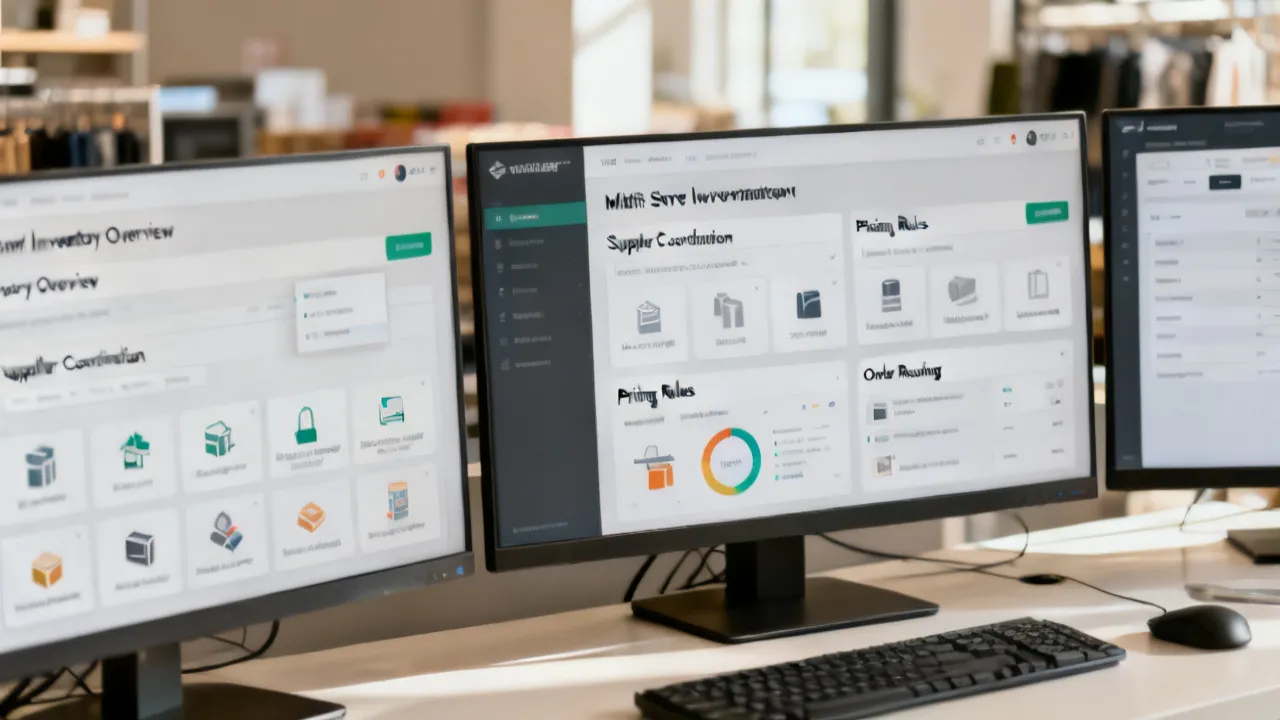
This guide explains how Multishop can improve multi-store operations by unifying product data, supplier coordination, and pricing rules across channels. Objectively, “multishop” commonly refers to platforms that support multiple storefronts or brands under one operational framework. The focus here is on practical decision criteria, integration considerations, and compliance requirements for sustainable growth.
Multishop Guide: Using Supplier Networks and Pricing Signals
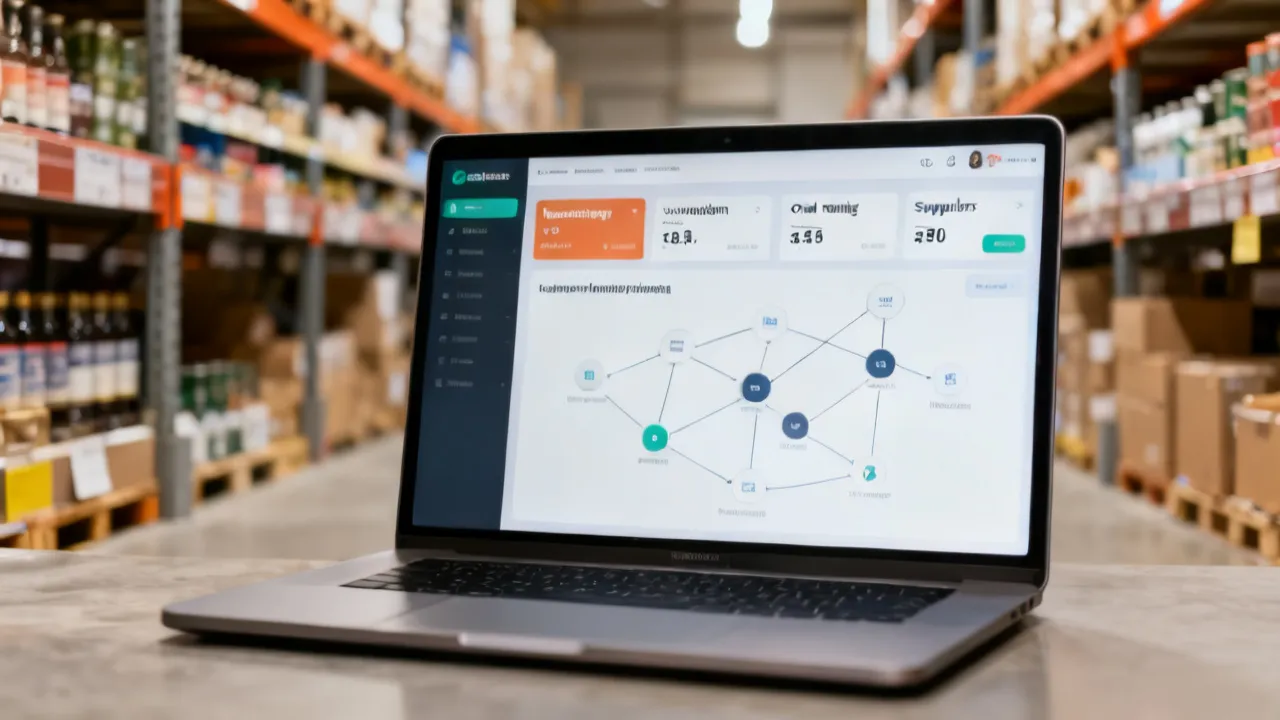
This guide explains how Multishop can help businesses coordinate multiple sales channels, align inventory and supplier workflows, and interpret pricing signals for steadier fulfillment. Background context is provided on the underlying concepts behind multichannel commerce, supplier sourcing, and operational controls, written objectively to support practical decision-making.
Multishop Guide for Multi-Vendor Operations
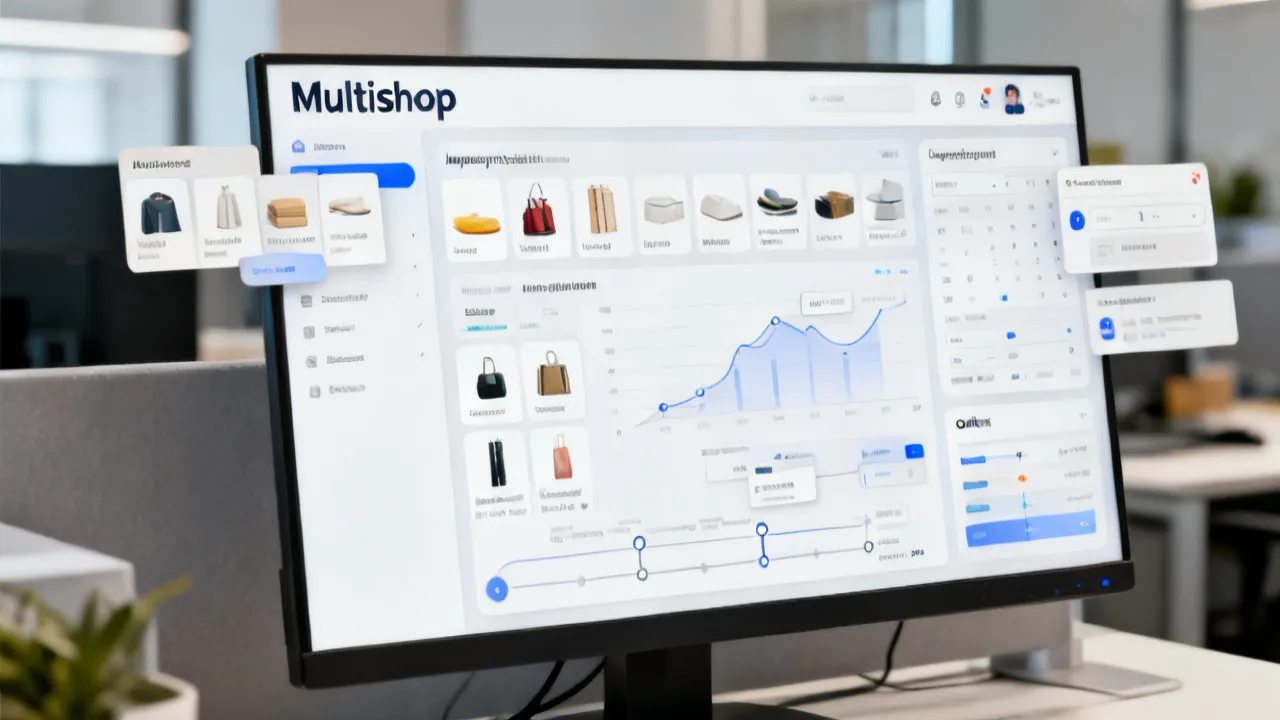
Multishop helps businesses coordinate multi-vendor product catalogs, inventory signals, and order workflows through one operational hub. This guide explains how Multishop fits modern marketplace and retail models, what buyers and suppliers typically need to align, and how to evaluate platform structure, data flows, and governance requirements without relying on hype.
Multishop: How to Choose the Right Marketplace Setup
This guide explains how Multishop enables multi-vendor operations, clearer product management, and smoother supplier coordination. Objectively, “Multishop” in e-commerce usually refers to platforms that support multiple storefronts or vendor catalogs under one operational framework, helping brands standardize onboarding, catalog rules, and fulfillment workflows—while still allowing localized merchandising decisions and governance controls.
