This guide explains how patients evaluate low-cost dental implants when budget is a priority, including treatment planning, risks to assess, and practical steps in English-, Spanish-, and Portuguese-speaking contexts. It also provides reference cost ranges, comparison resources, and a clear checklist—so you can compare options responsibly based on clinical fit rather than marketing claims.
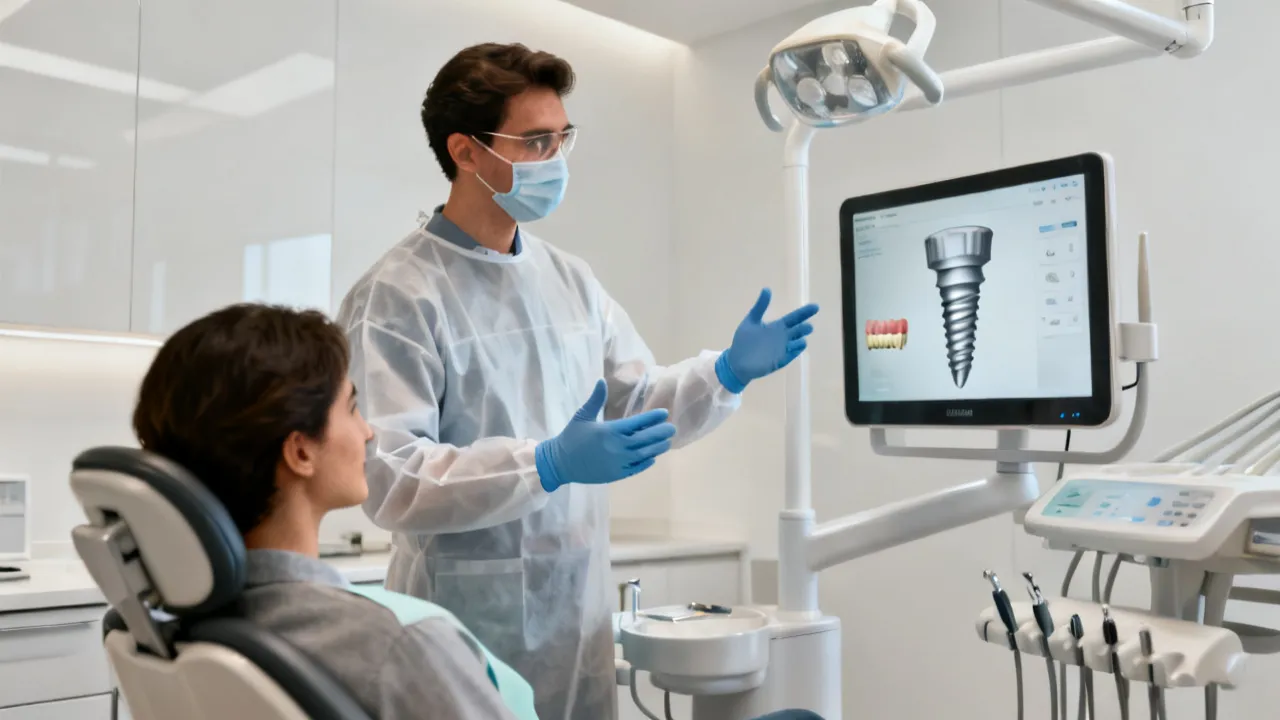
“Affordable Dental Implants” is a phrase that often appears in search results, but in the real world of clinical dentistry it rarely describes an unconditional service. Instead, very affordable implant pathways typically work through structured financing, eligibility-based programs, staged treatment plans, insurance coverage strategies, discount systems, or carefully managed pricing models. For patients, the most reliable approach is to look beyond headlines and focus on clinical and logistical quality signals—diagnostics, implant system selection, clinician experience, follow-up protocols, documented outcomes—then compare total treatment cost across comparable scopes of care.
In other words, “low-cost” should mean: lower financial burden without removing necessary steps that protect long-term success. Patients should not equate low price with minimal care, because implant dentistry is not a single event; it is a sequence of diagnostic, surgical, and restorative phases that must fit together biologically and mechanically. A plan can be affordable when it is efficient, evidence-based, and transparent about what is included. But if an offer hides scope, delays key steps, or excludes diagnostics and follow-up, the “discount” can shift costs to complications later.
In this article, you’ll find a professional, objective framework for understanding low-cost implant options, including practical steps to access implants in English-speaking, Spanish-speaking, and Portuguese-speaking countries, and reference price ranges for “individual dental implants” by country (for budgeting and discussion, not as guaranteed quotes). You’ll also see what claims often obscure, how to evaluate options like a clinician would, how to compare quotes fairly, and which requirements should be non-negotiable before you sign any affordability package.
Dental implants are complex, multi-stage treatments. Costs are influenced by several interconnected categories. Understanding these categories helps patients identify whether “low-cost” is achieved by efficiency and transparency, or by omission and risk.
Key cost drivers
Where “savings” may appear
When patients see “low-cost” offers, savings usually come from one or more of these levers. Many of these levers are legitimate if implemented appropriately:
Clinical caution: affordable should not mean incomplete
From an industry perspective, the key is to treat “affordable” as a starting point—not an outcome. A lower price can be appropriate when it reflects efficient planning and suitable materials, and when the clinic still delivers the essential diagnostic and follow-up components. Savings can be beneficial when they preserve quality. But it can be risky if cost-cutting reduces necessary diagnostics, compromises case selection, limits follow-up, or narrows the restorative plan without patient awareness.
A useful mental model is: implant outcomes depend on the “system.” The system includes diagnosis, placement, prosthetic design, occlusion, hygiene instructions, and maintenance. If one part of the system is downgraded, you may not notice the impact immediately—yet it can show up later as peri-implant inflammation, prosthetic complications, or discomfort that eventually increases total costs.
Search-friendly claims like Affordable Dental Implants can mask eligibility requirements and may be tied to marketing offers. Even when the offer is genuine, it may still leave important questions unanswered. Patients should expect that “affordable” may be limited by the clinic’s selection criteria, the scope of treatment included, or the timeline structure.
Common obstructions in affordability marketing
Incomplete information is the patient’s real risk
As a rule, any offer that does not clearly define scope (imaging, surgery, grafting, abutment, final crown/bridge, post-op medication, and maintenance) should be treated as incomplete information. In implant dentistry, it is not enough to know the implant component cost. Patients need the full “treatment pathway” cost: the steps, the timeline, and the responsibility for follow-up.
Questions that reveal whether scope is hidden
When a clinic advertises an attractive price, ask whether the quote includes:
When you ask those questions, you are not being difficult—you are simply verifying that “affordable” is complete and comparable.
When comparing affordable implant options, a robust evaluation process usually includes clinical checkpoints and administrative transparency. A clinician’s viewpoint emphasizes that implants are selected and planned based on biological feasibility and prosthetic requirements, not just on price.
Checklist for evaluating low-cost implant offers
Instead of asking only “How much?” ask “How will you achieve the outcome, and what is included in the pathway?” A clinician-style evaluation usually includes:
Clinician reasoning: what must align
In everyday practice, implant success is a multi-variable equation. Even if the implant itself is durable, problems can occur in:
Therefore, a low-cost plan must still provide the structure that aligns these variables. Otherwise, you might “save” initially and spend later.
The following table compares websites that commonly provide guidance on low-cost dental implant pathways. It is not an endorsement of any single provider; rather, it helps you understand what information each site emphasizes when patients search for affordability.
| Website focus |
| DentalViews (Low Cost Dental Implants): educational content on benefits, treatment types, process overview, FAQs, and how pricing may be structured. |
| Atlantic Dental Group: broad clinic services including implants, with practical information on scheduling, emergency care, and provider services. |
| DentaVacation: dental tourism orientation—cost comparison framing plus travel-coordination perspective for people seeking affordability abroad. |
| ADHP (American Dental Health Plans): insurance-planning approach to reduce out-of-pocket costs; emphasizes coverage options and how to apply/use benefits. |
| Rockville Dental Arts (Spanish site): Spanish-language clinic services information, supporting patients who prefer communication in Spanish. |
| Union City Mini Dental Implants (Spanish site): specialization in mini dental implants, typically discussed for smaller gaps and specific clinical scenarios. |
| Cigna Knowledge Center (Spanish guide): patient education on what to expect from dental implants, presented through a health-insurance lens. |
| Rubi Odonto: Portuguese clinical services overview including implants, orthodontics, and esthetic dentistry within a localized clinic setting. |
| Odontologia Velasco: Portuguese clinical services overview emphasizing implants/prosthetics and use of modern technologies. |
| DentalVidas: Portuguese dental plans orientation with emergency access via network model. |
source:
source: [www.dentalviews.com](https://dentalviews.com/low-cost-dental-implants/)
source: [www.atlanticdentalgrp.com](https://www.atlanticdentalgrp.com/)
source: [www.dentavacation.com](https://www.dentavacation.com/)
source: [rockvilledentalarts.com/es/](https://rockvilledentalarts.com/es/)
source: [rockvilledentalarts.com/es/](https://rockvilledentalarts.com/es/)
source: [unioncityminidentalimplants.com/es/](https://unioncityminidentalimplants.com/es/)
source: [www.cigna.com/es-us/knowledge-center/guide-to-dental-implants](https://www.cigna.com/es-us/knowledge-center/guide-to-dental-implants)
source: [www.rubiodonto.com.br](https://www.rubiodonto.com.br/)
source: [odontologiavelasco.com.br](https://odontologiavelasco.com.br/)
source: [dentalvidas.com.br](https://dentalvidas.com.br/)
Note: The keyword instructions referenced {lang}. Since no single language code was provided, the steps below are written in an implementation-ready way and include practical pathways for English-speaking, Spanish-speaking, and Portuguese-speaking contexts.
Before you chase prices, define what you mean by “implant.” Many low-cost pathways advertise “implant placement” but not the complete prosthetic solution. Patients need a written breakdown of what is included, because the final crown/bridge is often a major cost component.
A clinician-led plan typically defines:
Practical examples of “implant-only” ambiguity
Consider two patients:
The difference is not necessarily the quality—it’s clarity. Clarity allows you to compare apples-to-apples.
Even when cost matters, avoid skipping diagnostics. A low-cost plan that omits essential imaging or periodontal assessment is a financial gamble. Look for:
What patients should ask about diagnostics
Ask the clinic to explain how diagnostics influence decisions. For instance:
For low-cost decision-making, compare apples-to-apples. Ask each clinic for the same categories of information, then compare:
Why “total cost” beats “per implant” pricing
Clinics may quote “per implant” prices that look comparable but omit the variables that drive total cost: additional procedures, prosthetics type, and follow-up. A clinic that places 1–2 implants in straightforward conditions may have different costs than a clinic that treats bone deficiency requiring grafting.
Therefore, your benchmark should be the entire pathway for your specific case—what you will pay until the final prosthesis is delivered and stabilized.
In English-speaking regions, some patients reduce out-of-pocket expenses via dental insurance planning. In these contexts, resources often emphasize understanding coverage details and applying benefits properly. From a systems perspective, insurance can lower financial risk when implants are planned, staged, and documented correctly.
In Spanish-speaking and Portuguese-speaking contexts, reductions can come from:
How to approach insurance strategically
If a clinic cannot explain how insurance is handled, patients may face unexpected expenses after the surgery has already occurred.
Some patients pursue affordability through dental tourism platforms, comparing costs and coordinating travel. The clinician’s caution remains consistent: ensure the plan includes pre-op diagnosis, surgical standards, complication pathways, and post-op follow-up—ideally with communication between the abroad provider and your local dentist/hygienist.
Practical checks before traveling:
Risk management: follow-up gaps are a common problem
One of the biggest hidden costs in dental tourism is follow-up disruption. If you return home and your local provider cannot access surgical records or is not comfortable continuing care, you may delay integration monitoring. Ask:
Some clinics specialize in mini dental implants. Mini implants may be discussed for smaller gaps or specific clinical scenarios, but they are not universally equivalent to conventional implants. The “cheaper” narrative often depends on case selection and expected prosthetic design.
Ask about your measurements and the rationale behind choosing mini vs standard diameter approaches. Questions include:
Low-cost should not mean low-care. A durable outcome depends heavily on hygiene and professional maintenance. Request a schedule for:
Why maintenance is part of cost
Many patients budget only for the initial implant placement and final crown. Yet the long-term cost includes preventive maintenance. A “cheaper” initial plan can become more expensive if peri-implant inflammation develops and requires additional interventions. Maintenance should therefore be treated as part of the total investment.
The following ranges are for budgeting discussions only. Actual quotes depend on anatomy, the need for grafting or other procedures, prosthetic design, clinician/program pricing, anesthesia type, and whether diagnostics are bundled. All values below are “individual dental implant” references per country and should be confirmed with a local clinical assessment.
| Country | Currency | Price range (individual implant) |
|---|---|---|
| Spain | EUR (€) | €1,500 - €2,500 |
| Chile | CLP | CLP$800,000 - CLP$1,500,000 |
| Mexico | MXN ($) | $15,000 - $25,000 MXN |
| Colombia | COP | $2,000,000 - $4,000,000 COP |
| Peru | PEN (S/) | S/ 3,000 - S/ 6,000 |
| Argentina | ARS ($) | $80,000 - $150,000 ARS |
| Brazil | BRL (R$) | R$3,000 - R$8,000 BRL |
| Portugal | EUR (€) | €1,000 - €2,000 EUR |
How to interpret these ranges safely
A single-implant reference number can be misleading if your case requires grafting or if your “implant” actually refers to a different part of the procedure. For example:
So use these ranges as a starting point for conversation—not as a final budget promise.
Industry professionals often see recurring patterns in affordability marketing. These patterns are not inherently wrong, but they require verification. The goal is not to avoid low cost; it is to avoid hidden risk.
Patterns that require attention
What “clinically appropriate” acceleration looks like
Some patients are candidates for immediate placement or even immediate provisionalization depending on their case. But these are not universal. A clinically appropriate accelerated plan will:
What “too good to be true” often means
When a price seems dramatically lower than the market without explanation, it may reflect one of these situations:
Patients can’t always detect which of these applies until they request a full written plan.
Even within English-, Spanish-, and Portuguese-speaking communities, shopping behavior and communication preferences differ. Clinics in different regions also have different insurance norms, public health system structures, and typical dental plan models. The underlying clinical logic remains the same, but patient strategy and paperwork differ.
Patients frequently compare clinic credentials, financing structures, and educational material. Many will request a written treatment plan and ask whether dental insurance or membership plans can reduce out-of-pocket expenses. Some resources emphasize low-cost implant education and transparency on what is included.
Practical behaviors you may see include:
Spanish-language clinic materials can improve understanding and engagement—particularly for patients coordinating complex multi-visit care. Additionally, educational guides from major health organizations can help patients interpret what implant steps usually involve and what documentation to request.
In Spanish-speaking regions, patients may also prioritize:
In some specialized clinics, mini implant options may be discussed, though suitability depends on bone and restorative requirements.
In Portuguese-speaking regions, patients may consider clinic networks and dental plan structures, including emergency access models. Clinic pages often emphasize a range of services beyond implants (e.g., orthodontics/esthetic dentistry), which can matter if patients need broader oral rehabilitation to support implant outcomes.
Typical patient considerations include:
Not typically. An “affordable” offer often refers to a promotional or eligibility-based reduction. Ask for a written scope of care and a total-cost breakdown (implant + abutment + crown + grafting + follow-up). If your plan doesn’t list those items, you may pay more later than you expect.
They can be safe when clinical standards and proper diagnostics are followed. Safety depends on patient selection, imaging, surgical technique, implant system suitability, and maintenance—not only on price. A safe “low-cost” plan is transparent about what it includes and does not skip critical evaluations.
Common drivers include 3D diagnostic planning, implant system and prosthetic materials, the need for grafting or sinus procedures, and the scope of follow-up. Some programs bundle components; others price them separately. Without itemization, two quotes can be hard to compare.
Maybe. Grafting is determined by clinical bone volume/quality and positioning requirements. Pricing models should clearly state what happens if additional procedures are needed. A responsible clinic will outline decision triggers for grafting and provide a plan for how costs change (or how the alternative is handled).
Use a checklist: imaging included or not, implant type and brand/model, abutment and crown type, whether grafting is included, number of visits, post-op medication approach, warranty terms, and maintenance schedule. The “fair” comparison is based on the entire treatment pathway, not the implant fixture alone.
For some patients it can reduce expenses, but it also adds coordination risk. The key is ensuring comprehensive pre-op diagnosis, clear emergency pathways, and structured post-op follow-up with documented protocols. You should also confirm warranty and the process for addressing complications after returning home.
They can be. However, “cheaper” is not automatically “better.” Mini implants are suitable only for certain indications. A clinician should explain the rationale based on your gap size, bone conditions, occlusion, and restorative plan. Ask whether mini implants are chosen to reduce cost, or because your case anatomy supports it.
Ask about warranty terms for components, what is included in the package, surgical protocol, who will restore the implant, follow-up schedule, complication management, whether your case is monitored with 3D planning, and whether the clinic provides written records for your maintenance provider.
In some cases, yes. Cost can be reduced via scheduling efficiency, bundle pricing, financing structures, and transparent scope. But if the clinic refuses to explain what materials are used or offers only vague descriptions, you cannot confirm whether quality is preserved.
Timelines vary by case. Some plans allow earlier provisional restoration, while others require staged healing. A low-cost plan should still provide a realistic timeline based on your diagnostics. Ask for milestones (healing checkpoints, when impressions/scans are taken, and when the final crown/bridge is fitted).
Below is a conditions/requirements checklist—use it when contacting clinics, insurance planners, or tourism coordinators. This checklist is designed to help you prevent hidden costs and confirm that essential steps are included.
Why written documentation matters
In implant dentistry, the most common disputes arise from misunderstanding what was included. Written documentation reduces that risk. Even if you feel comfortable verbally, ask for the plan in writing and confirm that the final crown/bridge is included.
Low-cost dental implants can be a realistic option when your plan is transparent and clinically appropriate. Treat Affordable Dental Implants as a clue to investigate—rather than as a guarantee. By comparing total scope, confirming diagnostic standards, understanding what is included in the price, and committing to good maintenance, you increase the odds that affordability and outcomes will align.
The central principle is simple: implant affordability should come from structured value (efficient pathways, financing, bundled pricing, suitable materials) rather than from compromised diagnostics, unclear scope, or reduced follow-up. When you verify the entire pathway and demand itemized clarity, “low-cost” becomes not just a price point, but a controllable plan that supports long-term health and function.
1) The above information comes from online resources, and the data is as of October 2023.
2) Dental implant prices are for reference only and may vary by region, clinic and doctor.
- https://dentalviews.com/low-cost-dental-implants/
- https://www.atlanticdentalgrp.com/
- https://www.dentavacation.com/
- https://rockvilledentalarts.com/es/
- https://unioncityminidentalimplants.com/es/
- https://www.cigna.com/es-us/knowledge-center/guide-to-dental-implants
- https://www.rubiodonto.com.br/
- https://odontologiavelasco.com.br/
- https://dentalvidas.com.br/
A Guide to Cost-Efficient Small Electric Cars for Seniors

Mastering Debt Consolidation: Boost Your Credit Score and Manage Interest Rates

Your Guide to Loans, Credit Checks, and Interest Rates

Affordable Independent Living: Finding the Right Senior Housing

Guide to Senior Living Apartments: Affordable and Comfortable Environments

Leasing a Car: Expert Tips for Your Next Vehicle

Maintaining Oral Health After Tooth Loss with Dental Implants

Maintaining Oral Health with Dental Implants for the Elderly

Affordable Dental Implants: What to Expect and How to Save
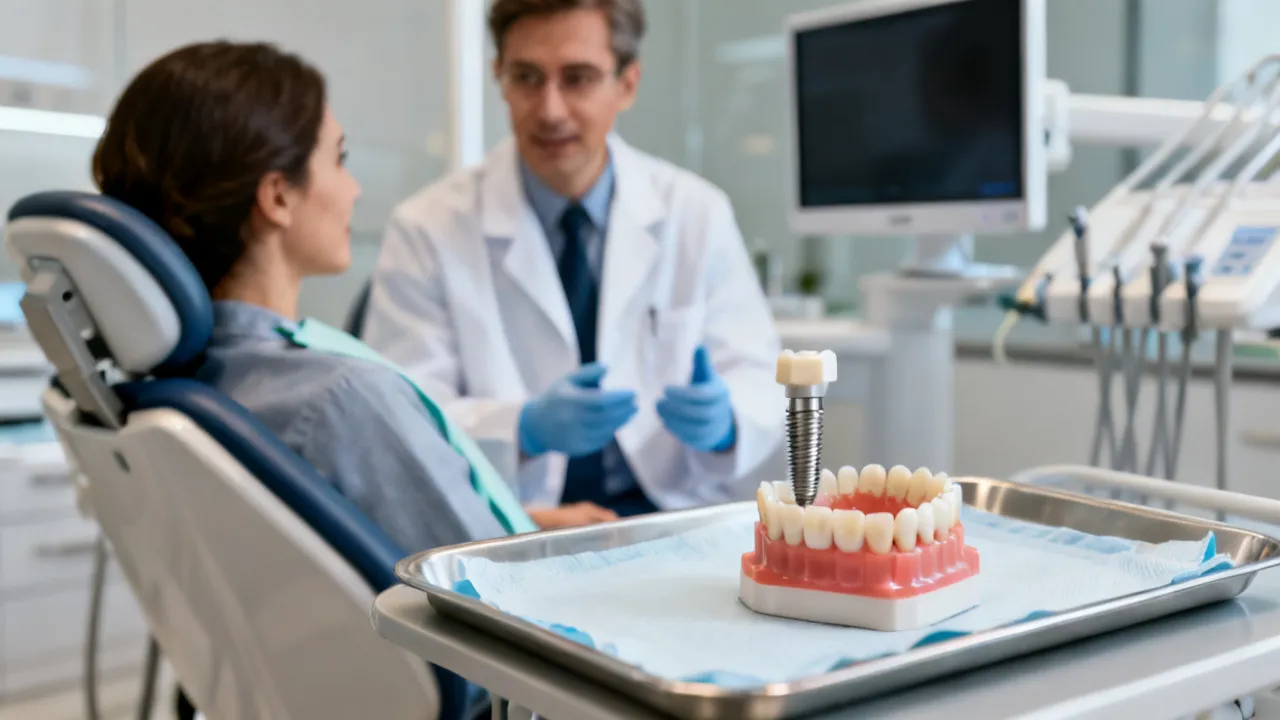
Maintaining Oral Health After Tooth Loss with Dental Implants
Tooth loss can significantly affect not only an individual's appearance but also their overall oral health. When a tooth is lost, the surrounding teeth can shift, leading to misalignment, increased plaque buildup, and potential periodontal issues. This article will discuss how dental implants can maintain oral health after tooth loss and provide practical guidance for individuals considering this restorative option.
Maintaining Oral Health with Dental Implants for the Elderly
As society advances, the significance of oral health, particularly among the elderly population, has garnered increasing attention. One of the essential developments in this realm is the emergence of dental implants, which provide a viable solution for individuals suffering from tooth loss.
This article aims to provide an objective overview of the benefits, maintenance, and best practices related to dental implants for the elderly, enabling them to maintain optimal oral health.
Affordable Dental Implants: What to Expect and How to Save
This guide explains what people usually mean by “Affordable Dental Implants,” outlines the realities of implant treatment pathways, and shows how to reduce total costs through low-cost implant programs, insurance, and dental tourism. It also compares example cost ranges across regions and provides an expert checklist before you commit.
A Professional Guide to Low-Cost Dental Implants
This guide explains how people evaluate Affordable Dental Implants options that may involve discount programs, insurance coordination, or treatment financing. It reviews what dental implant care typically includes, common price drivers, and how to compare providers using objective criteria. You’ll also find cost ranges by country, a step-by-step plan for pursuing lower-cost implant treatment, and practical FAQs.

Affordable Dental Implants: Costs, Coverage, and Eligibility
This guide explains how “Affordable Dental Implants” programs typically work in real-world dental care. It reviews objective options such as low-cost implant pathways, dental tourism considerations, and insurance-style plans, then outlines eligibility factors, selection criteria, and a practical cost-range overview across major English-, Spanish-, and Portuguese-speaking markets.
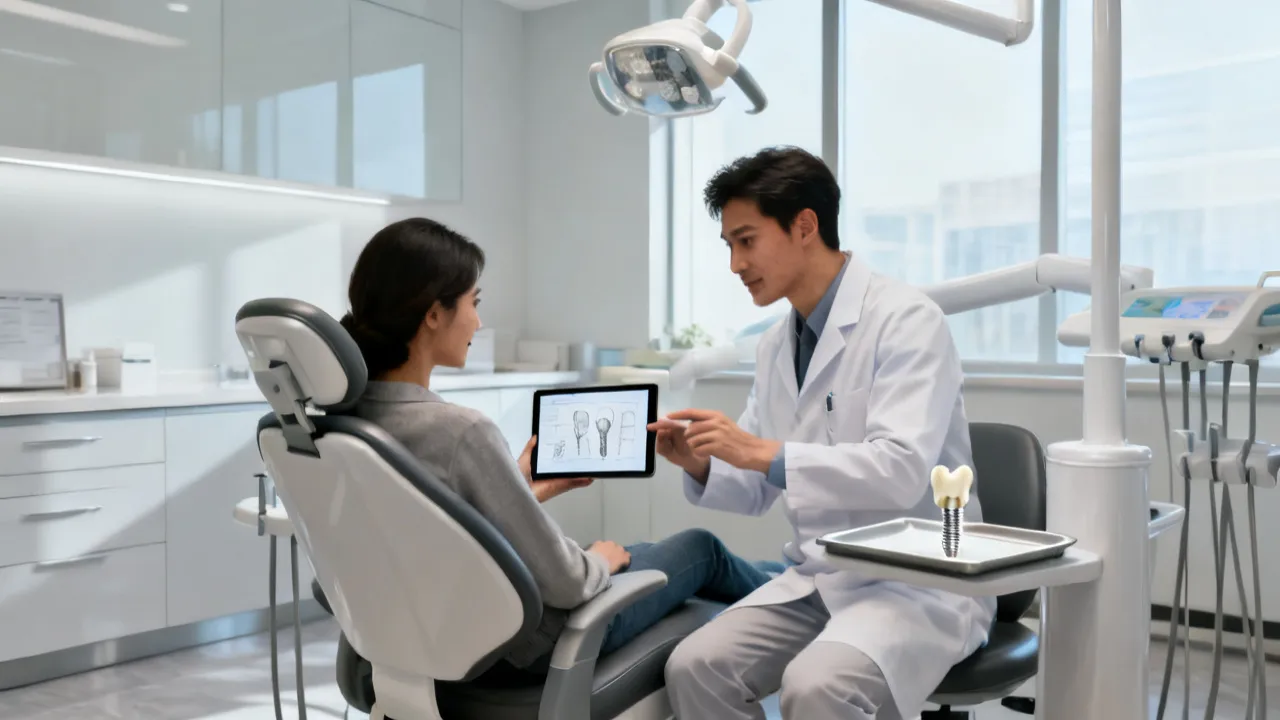
Affordable Dental Implants: What to Expect and How to Save
This guide explains how “Affordable Dental Implants” offers are typically structured and what patients should verify before scheduling. It also compares reputable low-cost implant information sources, outlines step-by-step pathways to reduce implant expenses, and provides practical cost-range benchmarks across major English-, Spanish-, and Portuguese-speaking countries.
